Added to cart
 Tools & Software · Tool
The project that runs late, expands beyond its fee and ends with a client who is not quite satisfied was almost always mis-scoped in the first conversation. Not underpriced. Mis-scoped: nobody agreed what finished looked like. So this is mostly about that first conversation, because everything after it is easier when it went well and […]
Download link by email · valid 30 days
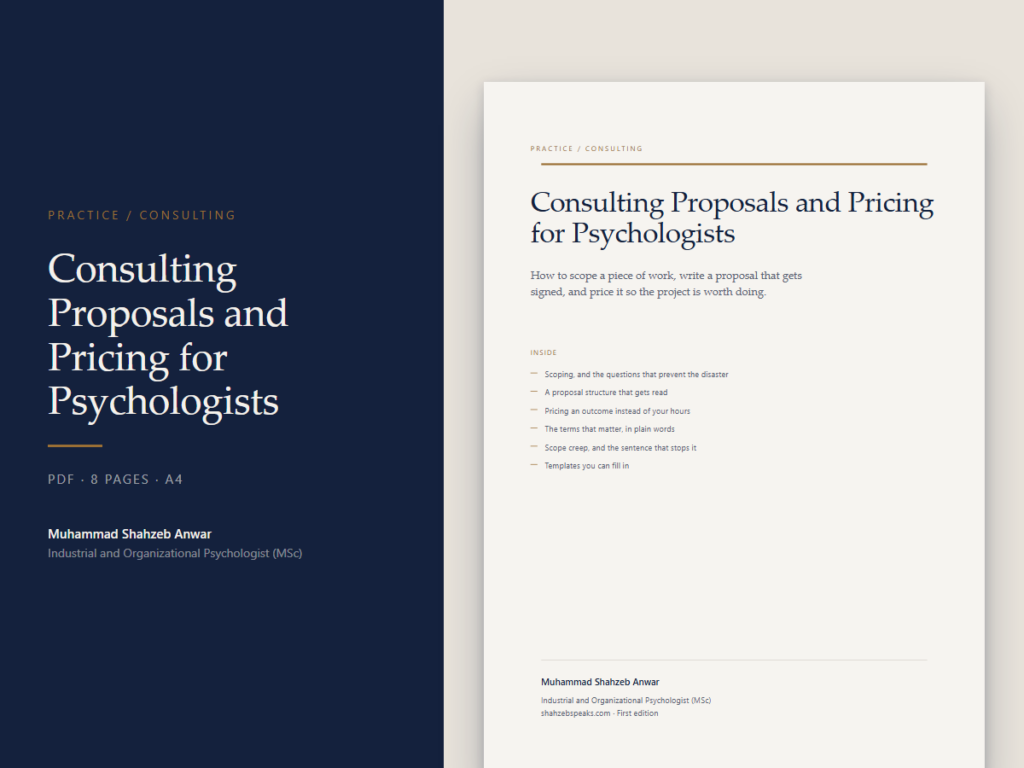
The project that runs late, expands beyond its fee and ends with a client who is not quite satisfied was almost always mis-scoped in the first conversation. Not underpriced. Mis-scoped: nobody agreed what finished looked like.
So this is mostly about that first conversation, because everything after it is easier when it went well and nothing after it can rescue it when it did not. Six scoping questions to answer before quoting, including the one that identifies the client you should walk away from.
Then a seven-part proposal structure, short enough to be read, with the section almost everybody omits and which is the reason the document is worth writing: what this does not cover. Naming the boundary before the work starts turns a future argument into a future change order.
Pricing follows: why an hourly rate caps your income, punishes efficiency and invites the client to audit your speed rather than your result; three tiers each doing a different job; and payment terms that protect you when a project goes quiet.
Plus the sentence that stops scope creep without sounding defensive, the contract terms that matter in plain words including the right to describe your own work anonymously, and fill-in templates for the scoping call and the proposal.
What it is not: legal advice. Contract law and data obligations differ by jurisdiction; have your agreement reviewed where you work.
8 pages, A4, formatted for printing. Delivered as a PDF immediately after payment.
Our psychology templates and tools are highly versatile—equally effective for licensed clinical professionals, wellness coaches, and individuals committed to personal mental health growth.
Yes, our therapeutic templates, worksheets, and intervention guides are strictly grounded in established, empirically supported psychological frameworks like CBT, DBT, and ACT.
Yes, all our psychology tools are intentionally engineered in high-resolution, print-ready monochrome and color formats tailored for standard A4 and US Letter sizes.
No. While these are excellent supplementary resources, they are educational diagnostic aids and therapeutic exercises, NOT substitutes for professional medical or psychiatric treatment.
Added to cart
Your cart is empty
Browse Shop Tools & Software · Tool
 Psychology Tools · Psychology