Rhode Brand Psychology Audit — How Hailey Bieber Built a Minimalist Skincare Empire on Scarcity and “Masstige”
How did Hailey Bieber cut through the most oversaturated market in the world? This psychology audit decodes the meteoric rise of Rhode. We analyze the psychology of "Masstige" (Prestige at Mass prices), the brilliance of the Peptide Lip Case as a physical status symbol, and how manufactured scarcity creates intense FOMO. Discover how Rhode bypassed traditional beauty marketing to create the ultimate minimalist, aspirational cult brand for Gen Z.

93 / 100
Overall consumer behavior effectiveness
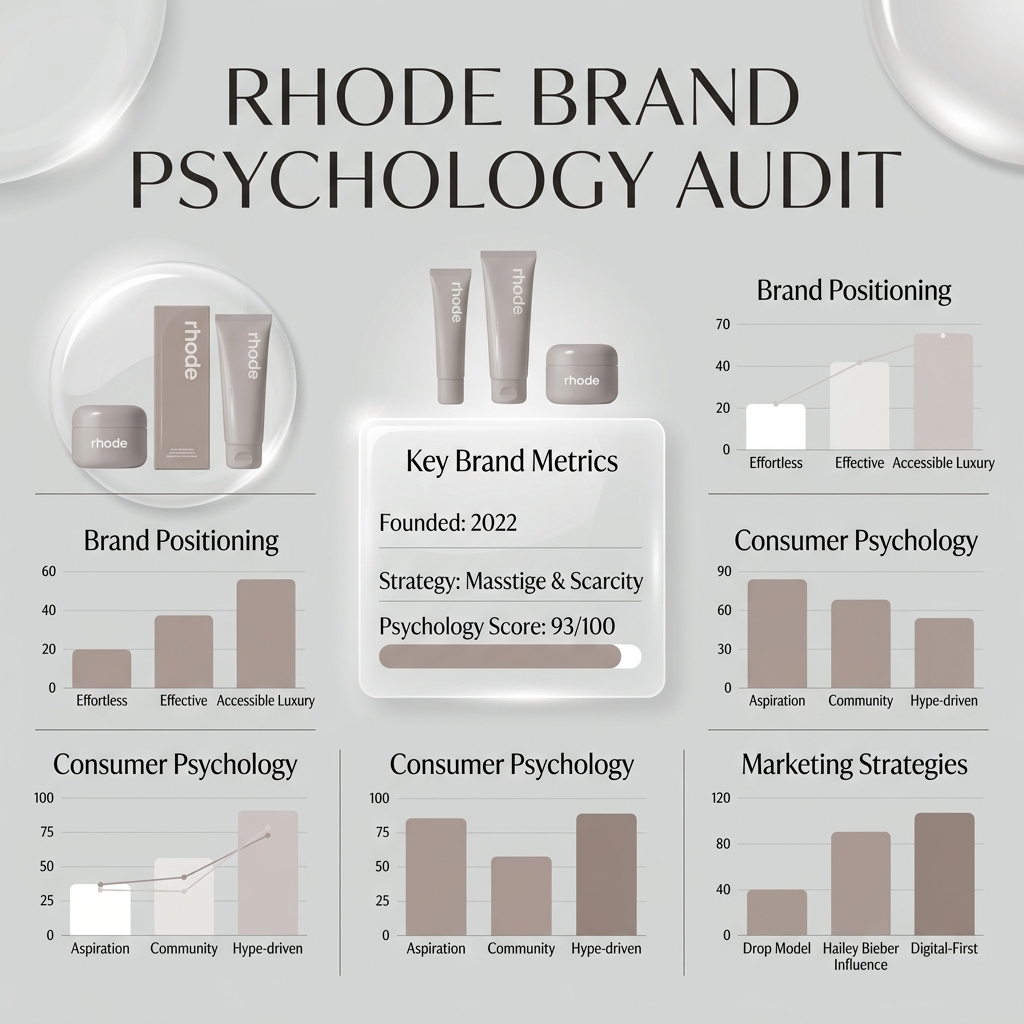
Brand Overview
- Brand nameRhode Skin
- Founded2022
- HeadquartersLos Angeles, California, USA
- IndustryBeauty & Skincare
- Websitewww.rhodeskin.com ↗
Psychology Techniques Identified
- 01"Masstige" Pricing Strategy (Prestige + Mass Market)
- 02The "Glazed Donut" Sensory Branding
- 03Functional Status Signaling (The Peptide Lip Case)
- 04Essentialism & Choice Paradox Reduction (Curated Line)
- 05Manufactured Scarcity & The "Waitlist" Psychological Loop
- 06Halo Effect of Founder Celebrity
- 07Minimalist Visual Identity as a Trust Proxy
- 08Community-Led "Drop" Culture (Streetwear Mechanics in Beauty)
- 09Organic User-Generated Content via Selfie Integration
- 10Tactile Packaging Psychology
Full Psychology Audit Report
In this audit
In 2022, the beauty industry was arguably the most oversaturated market on the planet. Launching a new celebrity skincare line seemed like a guaranteed path to irrelevance. Yet, when Hailey Bieber launched Rhode, it didn’t just succeed — it became an immediate cultural phenomenon, with waitlists stretching into the hundreds of thousands.
How did Rhode cut through the noise? The secret isn’t just in the peptides. Rhode’s meteoric rise is a masterclass in modern behavioral science, utilizing the psychology of Essentialism, Manufactured Scarcity, and “Masstige” (Mass-Prestige) Pricing.
This audit breaks down how Rhode bypassed traditional beauty marketing to create the ultimate minimalist, aspirational cult brand for Gen Z.
“Rhode didn’t launch a skincare line; they launched a psychological status symbol. They took the ‘streetwear drop model’ used by Supreme and applied it to lip balm, turning mundane restocks into high-anxiety cultural events.”
— Brand Psychology Analysis, ShahzebSpeaks
📋 Brand Overview: Rhode at a Glance
| Company Name | Rhode (Rhode Skin) |
| Founder | Hailey Rhode Bieber |
| Founded | June 2022 — Los Angeles, California |
| Core Aesthetic | “Glazed Donut Skin” / Minimalist / Clean Girl |
| Pricing Strategy | “Masstige” (Prestige perception at Mass prices: $16 – $30) |
| Key Psychological Drivers | Manufactured Scarcity, Functional Status Signaling, Essentialism |
💰 Chapter 1: The Psychology of “Masstige” (Prestige + Mass)

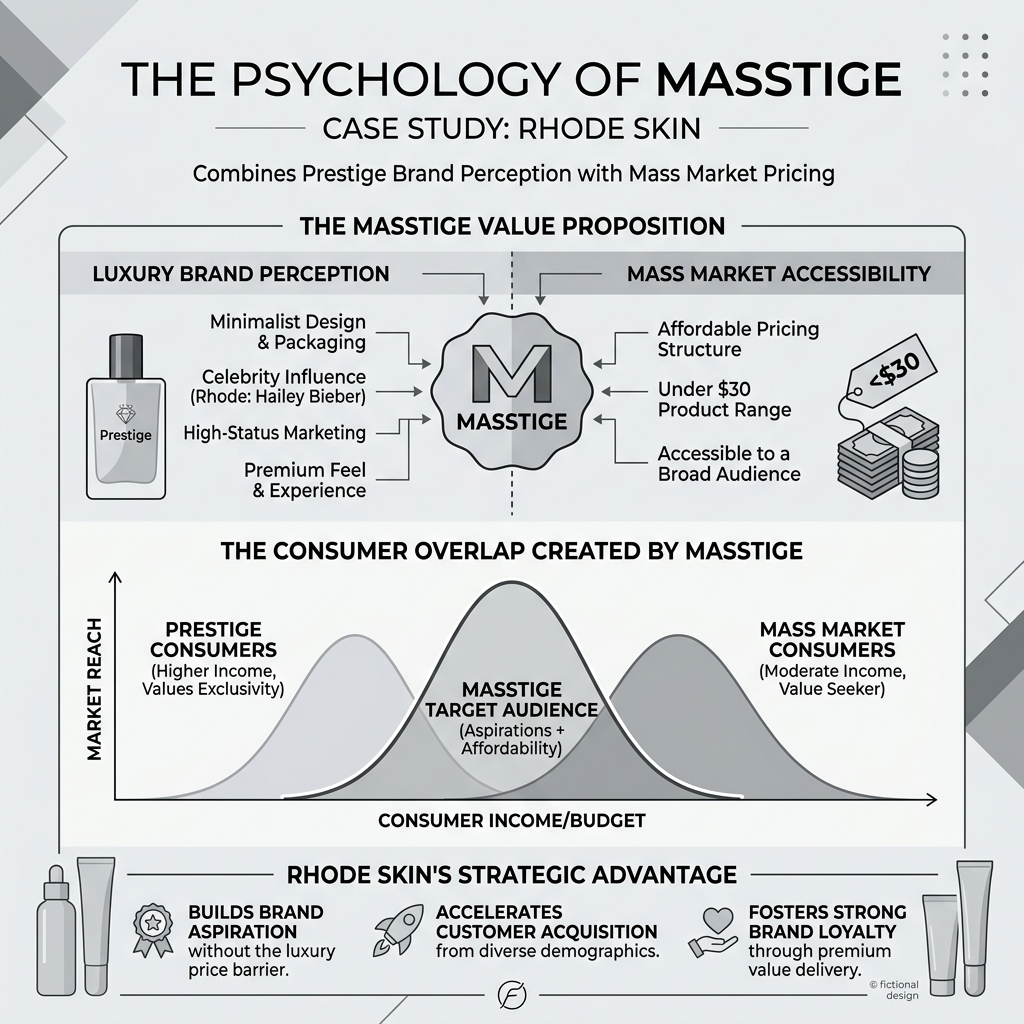
The most brilliant element of Rhode’s strategy is its pricing. With the Peptide Lip Treatment priced at $16 and the Glazing Fluid at $30, Rhode sits firmly in the accessible mass-market bracket.
However, every other brand touchpoint—the minimalist grey packaging, the high-fashion editorial photography, the sleek typography, and Hailey Bieber’s personal brand—screams Luxury. This creates a psychological phenomenon known as “Masstige” (Mass + Prestige).
- Cognitive Dissonance Resolution: When a consumer sees a product that looks like it belongs in a high-end boutique but carries a drugstore price tag, it creates positive cognitive dissonance. The brain resolves this by concluding: “I am getting an incredible deal on a luxury item.”
- The Democratization of Aspiration: Young consumers want to buy into Hailey Bieber’s lifestyle, but most cannot afford her Yves Saint Laurent wardrobe. A $16 lip tint serves as an accessible entry ticket to an otherwise exclusive aesthetic club.
📱 Chapter 2: The Peptide Lip Case — Functional Marketing Genius

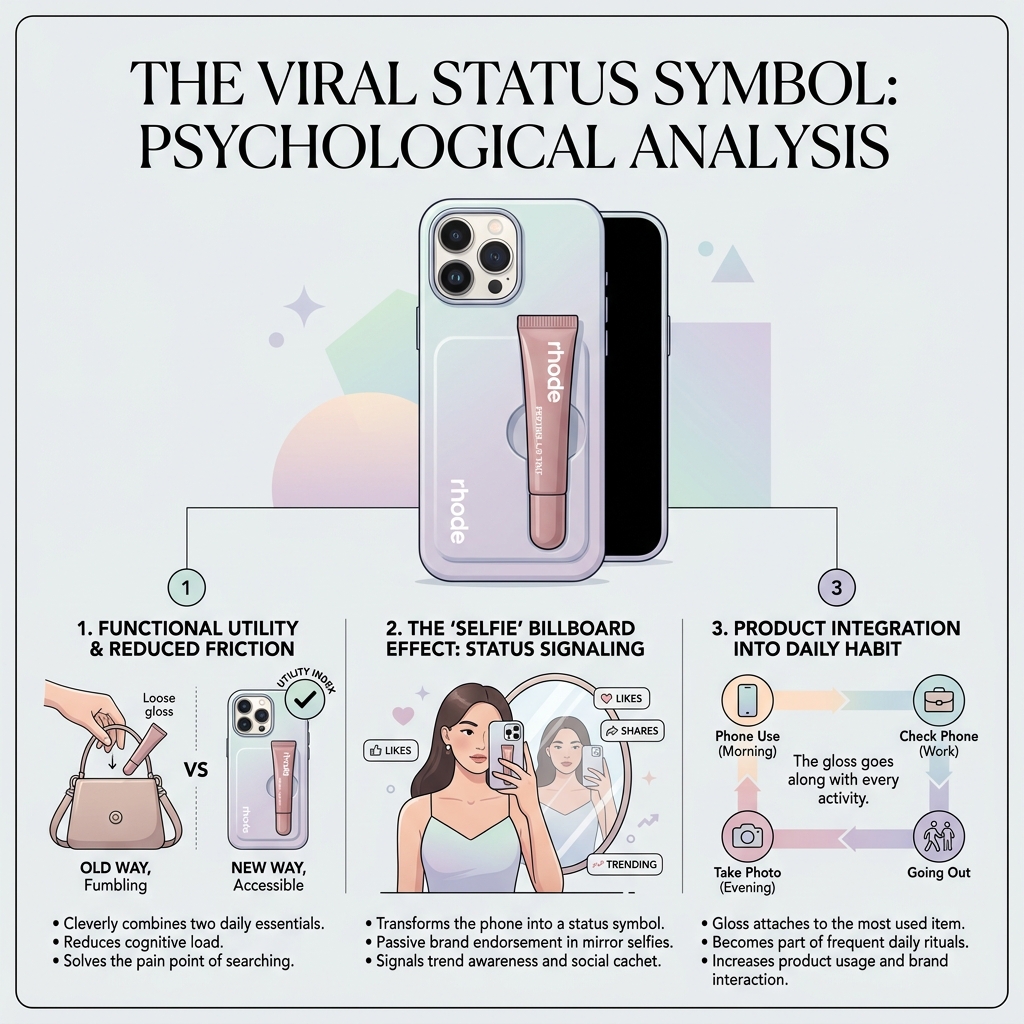
In February 2024, Rhode released a silicone phone case with a custom-molded slot designed to hold their Peptide Lip Treatment. It broke the internet. Psychologically, this is one of the greatest product marketing moves of the decade.
The “Billboard” Effect & Mirror Selfies
Gen Z communicates heavily through “mirror selfies.” Traditionally, a lip gloss lives at the bottom of a purse, invisible to the world. By attaching the product directly to the back of the phone, Rhode forced their product into every single mirror selfie their customers take.
This transforms the consumer into a walking billboard. It relies on the psychological principle of Social Proof—when hundreds of influencers post mirror selfies with the Rhode case, it signals to the broader market that this is the current “It” item required for social relevance.
Functional Status Signaling
The case isn’t just an ad; it’s a functional status symbol. Like carrying a Starbucks cup with the logo facing outward, holding a phone with a Rhode lip case signals to peers: “I am part of the in-group. I have the aesthetic.” It turns a private skincare routine into a public lifestyle flex.
⏳ Chapter 3: Manufactured Scarcity & The “Streetwear” Drop Model
Rhode rarely has its full lineup in stock. Products constantly sell out, leading to massive waitlists. While initially portrayed as supply chain issues, this is a calculated application of the Streetwear Drop Model (pioneered by brands like Supreme) applied to beauty.
- The FOMO Loop (Fear Of Missing Out): Scarcity triggers a primal psychological response. When a product is difficult to get, its perceived value skyrockets.
- The Urgency Metric: When a “restock” is announced via text or email, consumers don’t have time to rationally evaluate if they need another lip tint. The artificial scarcity forces impulsive, emotion-driven purchasing.
- The Trophy Effect: Finally acquiring a sold-out Rhode product makes the consumer feel they have “won” a competition, turning a simple retail transaction into an emotional victory.
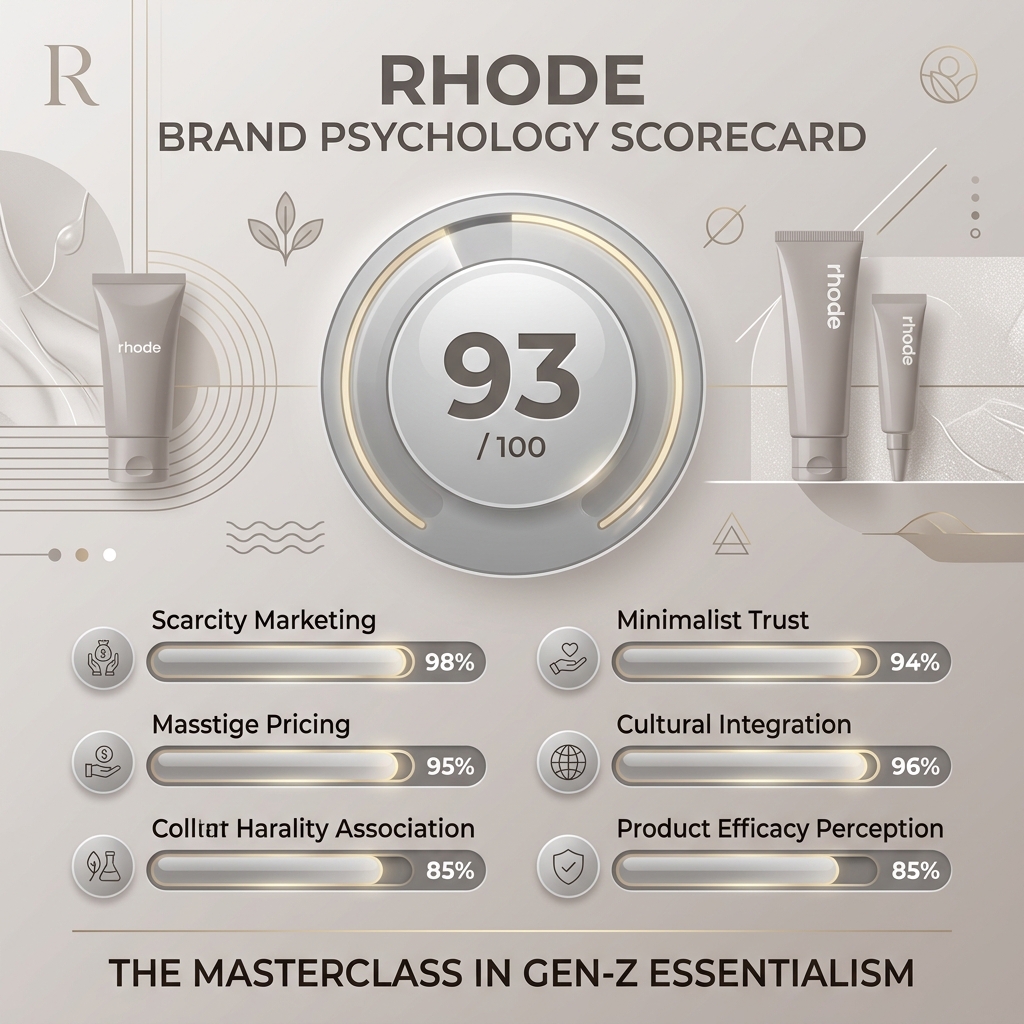
📊 Final Scorecard Verdict: 93/100

Rhode is a masterclass in modern brand psychology. Hailey Bieber and her team understood that today’s consumers are overwhelmed by choice (The Paradox of Choice) and exhausted by 10-step skincare routines.
By offering an “essentialist” line of only a few highly curated products, housed in minimalist packaging, and priced accessibly—but marketed like rare luxury goods—Rhode created the perfect storm of desire. The brand proves that in the 2020s, you don’t sell the ingredients; you sell the aesthetic, the community, and the feeling of being “in the know.”
Audit conducted by Muhammad Shahzeb — MSc Industrial & Organizational Psychology | Brand Psychology Specialist | Full-Stack Web Developer
Learn more about my approach →
Key Findings
- Rhode successfully adopted the "streetwear drop model" (used by Supreme) into skincare, turning mundane restocks into high-anxiety cultural events.
- The Peptide Lip Case is a masterpiece of functional marketing—it forces the product into every mirror selfie, turning the consumer's phone into a billboard.
- By keeping prices under $30 but using luxury minimalist packaging, Rhode triggers the "Masstige" psychological reward: consumers feel they are getting a premium status symbol at an accessible price.
- Instead of overwhelming buyers with 50 products, Rhode's "essentialist" core line of just 3-4 products eliminates the Paradox of Choice, reducing purchase anxiety.
- The term "Glazed Donut Skin" created a highly specific, visceral sensory goal that is far more psychologically actionable than generic "glowing skin."
Overall Psychology Score
Rhode Skin scores 93/100 in our comprehensive psychology audit covering consumer behavior strategies, UX design principles, and psychological marketing effectiveness.
The detailed dimension scores are in the audit's Psychology Scorecard chapter.
High impactMuhammad Shahzeb
MSc Industrial Psychologist, specializing in consumer behavior, UX psychology, and brand strategy analysis. Helping brands understand the psychology behind their success.
About Muhammad Shahzeb →