Added to cart
 Tools & Software · Tool
Reduce cognitive load is advice that sounds complete and tells you nothing, because some of the load in an interface is the work the person came to do. Remove that and the product becomes useless. The distinction that makes it actionable comes from instructional design and splits load three ways. Intrinsic load is the difficulty […]
Download link by email · valid 30 days
Reduce cognitive load is advice that sounds complete and tells you nothing, because some of the load in an interface is the work the person came to do. Remove that and the product becomes useless.
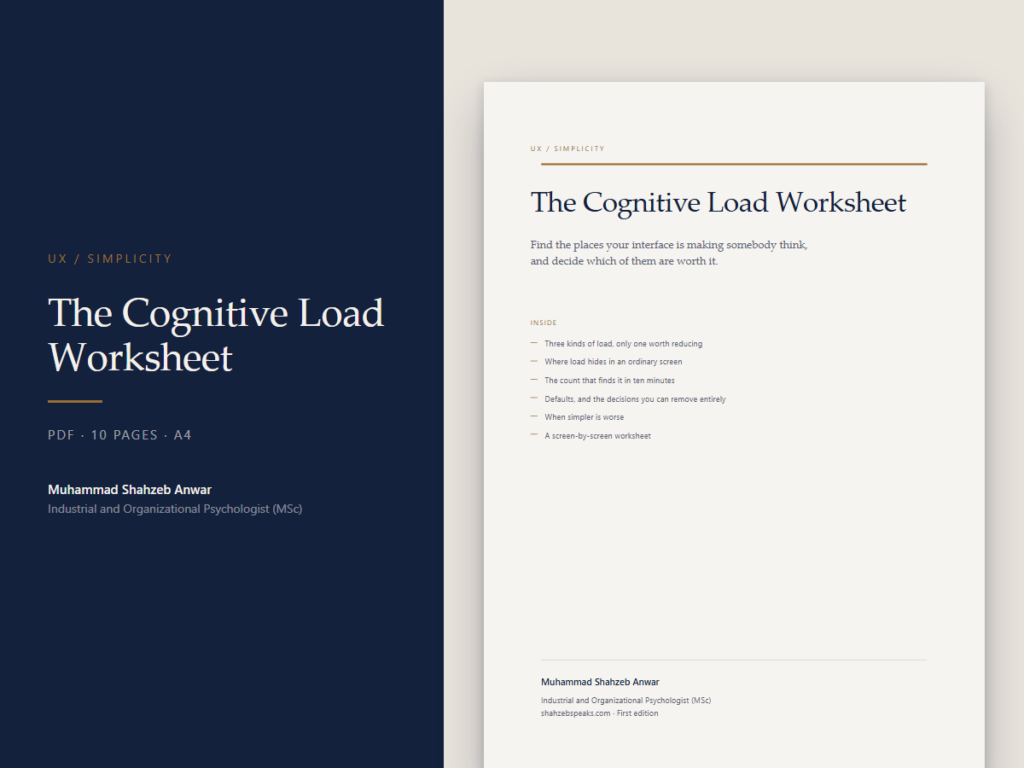
The distinction that makes it actionable comes from instructional design and splits load three ways. Intrinsic load is the difficulty of the task itself and cannot be removed. Germane load builds understanding, and stripping it out is why some very simple products never become useful to anybody. Extraneous load is work your interface invented, and it is the only category worth attacking.
The worksheet covers the seven places extraneous load actually hides, a ten-minute count per screen that finds more than an hour of discussion, and the defaults and inferences that let you delete questions rather than making them easier to answer.
Two sections most simplification advice omits: progressive disclosure and the specific ways it fails, and the conflict between what a new user needs and what somebody using your product for the hundredth time needs. A usability session with five new users tells you nothing about the people who generate your revenue.
What it is not: a measurement instrument. The counts organise judgement, they do not quantify mental effort, and no effect sizes appear because none are worth quoting for interfaces.
10 pages, A4, formatted for printing. Delivered as a PDF immediately after payment.
Our psychology templates and tools are highly versatile—equally effective for licensed clinical professionals, wellness coaches, and individuals committed to personal mental health growth.
Yes, our therapeutic templates, worksheets, and intervention guides are strictly grounded in established, empirically supported psychological frameworks like CBT, DBT, and ACT.
Yes, all our psychology tools are intentionally engineered in high-resolution, print-ready monochrome and color formats tailored for standard A4 and US Letter sizes.
No. While these are excellent supplementary resources, they are educational diagnostic aids and therapeutic exercises, NOT substitutes for professional medical or psychiatric treatment.
Added to cart
Your cart is empty
Browse Shop Tools & Software · Tool
 Digital product · Tool