Psychology Behind Saudi Aramco’s Global Dominance
Saudi Aramco — the world's most profitable company — doesn't just drill oil, it engineers psychological inescapability. This full audit exposes how a $1.78 trillion corporation controls global energy markets, manipulates oil prices through artificial scarcity, and funds an entire nation's future while making shareholders feel safe about a dying industry.

88 / 100
Overall consumer behavior effectiveness
Brand Overview
- Brand nameSaudi Aramco
- Founded1933
- HeadquartersDhahran, Saudi Arabia
- IndustryEnergy / Oil & Gas
- Websitewww.aramco.com ↗
Psychology Techniques Identified
- 01Anchoring Bias
- 02Scarcity Principle
- 03Loss Aversion
- 04Authority Bias
- 05Status Quo Bias
- 06Availability Heuristic
- 07Sunk Cost Fallacy
- 08Social Proof
- 09Decoy Effect
- 10Commitment & Consistency
- 11Endowment Effect
- 12Fear of Missing Out (FOMO)
- 13Mere Exposure Effect
- 14Halo Effect
Full Psychology Audit Report
In this audit
In a world obsessed with tech unicorns and social media empires, one company quietly generates more profit than Apple, Microsoft, and Google combined in their best quarters. It doesn’t sell apps. It doesn’t need your data. It sells something far more fundamental — the lifeblood of industrial civilization itself. That company is Saudi Aramco.
While Silicon Valley founders chase billion-dollar valuations, Aramco crossed $1.78 trillion almost as an afterthought. While startups burn cash for growth, Aramco casually generated $161.1 billion in net income in a single year (2022). And while every company on Earth worries about competition, Aramco has engineered a position where competition is structurally impossible.
In this comprehensive psychology audit, I’ll dissect every psychological lever Saudi Aramco pulls — from geopolitical scarcity engineering to investor loss aversion exploitation — and reveal why this isn’t just the world’s most profitable company, but potentially the most psychologically powerful commercial entity ever created.
“Saudi Aramco doesn’t compete in the oil market — it IS the oil market. Every other energy company operates within the reality that Aramco defines.”
— Brand Psychology Analysis, ShahzebSpeaks
📋 Brand Overview: Saudi Aramco at a Glance
| Official Name | Saudi Arabian Oil Group (Saudi Aramco) |
| Stock Ticker | 2222.SR (Saudi Tadawul Exchange) |
| Founded | 1933 (as California-Arabian Standard Oil Company) |
| Headquarters | Dhahran, Eastern Province, Saudi Arabia |
| Chairman | Yasir O. Al-Rumayyan (also Governor of PIF) |
| President & CEO | Amin H. Nasser (since 2015) |
| Market Cap (Peak) | $1.78 Trillion (2nd most valuable company globally) |
| Revenue (2024) | $494.9 Billion |
| Net Income (2024) | $106.2 Billion |
| Proven Reserves | 258.8 Billion Barrels (50+ years at current rates) |
| Daily Production | 9.4 Million Barrels/Day (capacity: 12.7M BPD) |
| Employees | 73,000+ worldwide |
| Ownership | ~98.2% Saudi Government (via PIF + direct) · ~1.8% public float |
| Website | www.aramco.com |
📜 Chapter 1: The Complete History of Saudi Aramco (1933–2025)
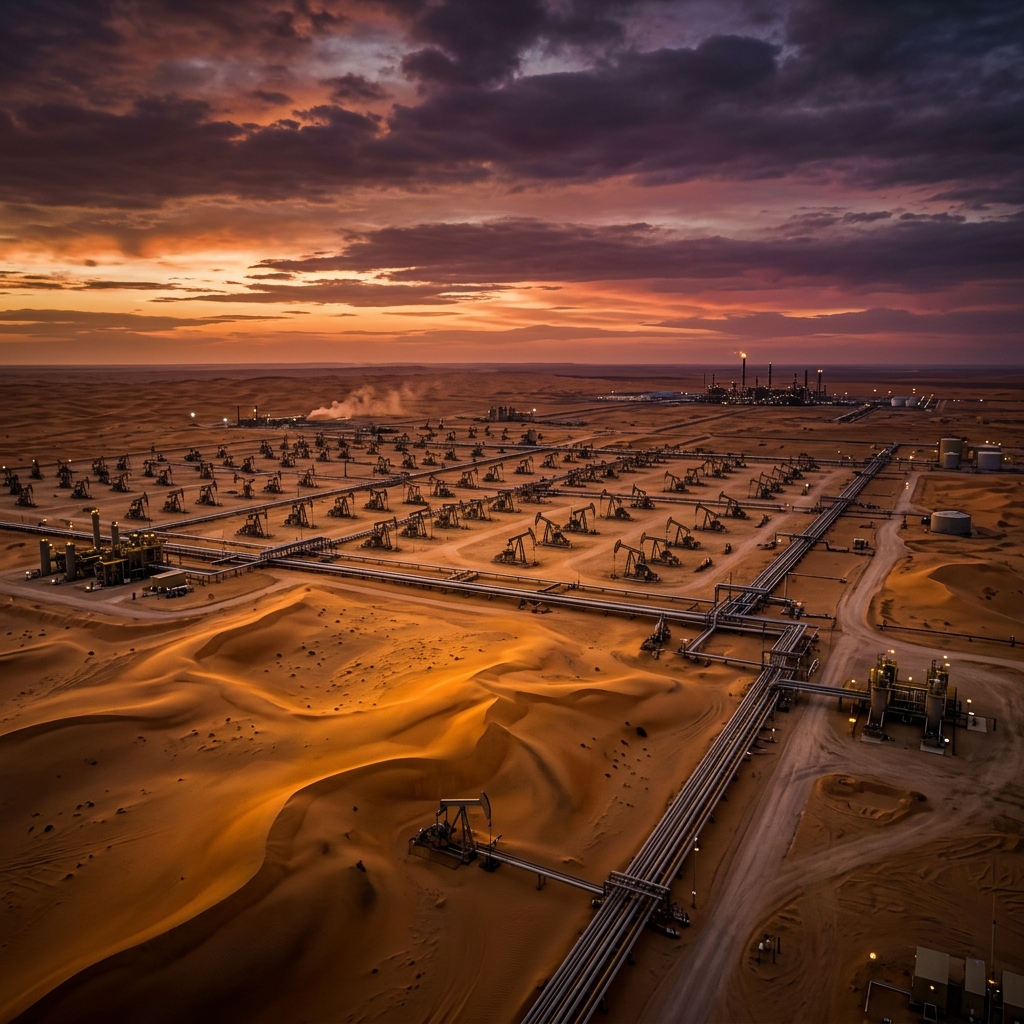
🟢 1933 — The Birth: An American Gamble in the Desert
The story begins in 1933, when King Abdulaziz Ibn Saud granted an oil concession to Standard Oil of California (SOCAL). The company formed the California-Arabian Standard Oil Company (CASOC) and began drilling in one of the most inhospitable environments on Earth.
From a psychology perspective, this was a textbook case of risk-seeking behavior under uncertainty. SOCAL was betting millions on a geological hunch in a country most Westerners couldn’t locate on a map. This is what behavioral economists call the “availability heuristic” in reverse — the absence of visible evidence (no one had found oil in Arabia yet) should have deterred investment, but the possibility of extraordinary returns overrode rational caution.
🟢 1938 — Well No. 7: The Discovery That Changed Everything
After years of dry wells and near-bankruptcy, Well No. 7 at Dammam struck commercial quantities of oil at 1,440 meters in March 1938. This single well would eventually produce for over 80 years.
What makes this psychologically fascinating is the sunk cost dynamic that nearly prevented the discovery. SOCAL had already spent millions and was on the verge of abandoning the concession. The decision to drill deeper at Dammam was driven by what we now call the sunk cost fallacy — but in this rare case, the fallacy actually led to the correct outcome. This created a powerful origin myth for Aramco: “persistence against all odds,” which continues to shape the company’s corporate culture today.
🟢 1948 — Ghawar Field: Nature’s Greatest Oil Prize
The discovery of the Ghawar oil field — the largest conventional oil field ever found — fundamentally altered the global energy landscape. With an estimated 170+ billion barrels of original oil in place, Ghawar alone could sustain entire countries’ energy needs for decades.
Ghawar’s psychological impact on global markets cannot be overstated. It created what I call the “geological authority effect” — the perception that Saudi Arabia (and by extension, Aramco) has an almost divine right to dominate energy markets. This perception persists even as Ghawar’s output has declined from its peak of 5+ million barrels/day.
🟢 1973 — The Oil Embargo: Weaponizing Scarcity
The 1973 OPEC oil embargo was perhaps the most powerful demonstration of scarcity psychology in economic history. When Saudi Arabia and other OPEC members restricted oil exports in response to Western support for Israel during the Yom Kippur War:
- Oil prices quadrupled from $3 to $12 per barrel within months
- Gas stations in America had hour-long queues — physical manifestation of scarcity
- Western governments experienced panic — the availability heuristic made the threat feel existential
- The psychological imprint was permanent: “Saudi Arabia can cut off our energy supply at will”
This event permanently embedded the scarcity principle into global energy consciousness. Even today, five decades later, the mere suggestion that Saudi Arabia might reduce production triggers immediate market anxiety. This isn’t rational — it’s a conditioned fear response that Aramco has learned to leverage masterfully.
🟢 1980 — Full Nationalization: The Ultimate Power Consolidation
By 1980, the Saudi government had completed its 100% acquisition of Aramco from American shareholders. The company was officially renamed Saudi Aramco in 1988. This transformation is psychologically significant because it fused corporate identity with national identity.
When a company becomes synonymous with a nation’s sovereignty, criticizing the company feels like criticizing the country — a powerful identity-protective mechanism that shields Aramco from the kind of scrutiny that other corporations face.
🟢 2019 — World’s Largest IPO: Manufacturing Social Proof at Scale
Aramco’s $25.6 billion IPO in December 2019 was a masterclass in social proof engineering. By listing on the Saudi Tadawul exchange at a $1.7 trillion valuation, Aramco accomplished several psychological objectives:
- Anchoring: The $2 trillion target valuation (originally proposed by MBS) set an anchor that made $1.7 trillion feel like a “discount”
- Bandwagon effect: “If the world’s largest IPO was oversubscribed, surely Aramco must be worth it”
- Authority bias: Goldman Sachs, JPMorgan, and Morgan Stanley as underwriters lent institutional credibility
- Commitment & consistency: Retail investors who bought shares became psychologically committed to defending their investment decision
🟢 2022 — Record Profits: The Ukraine War Windfall
Russia’s invasion of Ukraine sent oil prices soaring above $120/barrel, and Aramco’s net income hit an all-time record of $161.1 billion — more profit in a single year than most companies generate in a decade. This surpassed Apple, Microsoft, and Alphabet’s profits combined.
The psychological effect on investors was profound: it reinforced the availability heuristic (“oil companies print money during crises”) and created recency bias that made energy transition risks feel distant and theoretical compared to the very tangible, very large dividend checks.
🟢 2024 — $124.3B Dividend: The Largest Corporate Payout in History
Aramco’s $124.3 billion dividend payout in 2024 cemented investor loyalty through pure loss aversion. The reasoning is simple: “Even if oil demand peaks eventually, I can’t give up a 6.5% yield backed by a sovereign government.” The dividend acts as psychological handcuffs — golden ones, but handcuffs nonetheless.
🧠 Chapter 2: The Psychology of Energy Dominance — How Aramco Controls Perception

Saudi Aramco doesn’t operate like a normal company. It operates like a psychological institution — one that has mastered the art of controlling how entire nations, markets, and governments feel about energy.
🔬 Scarcity Engineering: The Ultimate Psychological Weapon
Aramco’s most powerful psychological tool is its spare production capacity. The company can produce up to 12.7 million barrels per day but typically produces around 9.4 million. This gap of ~3.3 million bpd isn’t waste — it’s the world’s most potent scarcity lever.
Here’s how the psychology works:
- When Aramco restricts supply (via OPEC+ cuts), oil prices rise. This triggers loss aversion in consuming nations — the fear of even higher prices drives preemptive buying, which pushes prices higher still. A self-reinforcing panic cycle.
- When Aramco floods supply (as in 2020’s price war with Russia), it triggers existential fear in competing producers. US shale operators, Canadian oil sands, and deepwater projects all become unprofitable below $40-50/barrel. Aramco’s $3/barrel cost makes it essentially invulnerable.
- The mere existence of spare capacity creates constant background anxiety in energy markets. Traders, governments, and rival producers must always factor in the question: “What will Saudi Arabia do next?” This is a textbook application of the uncertainty principle in behavioral economics.
🏛️ Authority Bias: The Sovereign Guarantee Effect
Aramco benefits enormously from being backed by the Kingdom of Saudi Arabia. In psychology, the authority principle (Cialdini, 2006) states that people are more likely to comply with or trust entities perceived as authoritative. Aramco leverages this in several ways:
- Sovereign dividend guarantee: The Saudi government guarantees Aramco’s base dividend of ~$81.2B/year. This isn’t just a financial promise — it’s a psychological contract that removes the default risk anxiety that plagues other high-yield investments.
- OPEC leadership: As the de facto leader of OPEC, Saudi Arabia (and by extension Aramco) positions itself as the “responsible steward” of global energy stability. This framing transforms a cartel into a public service provider.
- Royal patronage: Crown Prince Mohammed bin Salman’s personal involvement in Aramco’s strategy (the IPO, Vision 2030) adds a layer of charismatic authority to the company’s image.
📉 Loss Aversion: Why Investors Can’t Leave
Daniel Kahneman’s research on loss aversion — the finding that losses feel approximately twice as painful as equivalent gains feel pleasurable — explains why Aramco’s investor base is so sticky. Consider the psychology of an Aramco shareholder:
- The dividend trap: With a ~6.5% yield, selling Aramco shares means losing $65,000 in annual income per million invested. The pain of losing this income stream overwhelms rational concerns about long-term oil demand decline.
- Anchoring to purchase price: Investors who bought at the IPO or higher prices are psychologically anchored to their purchase price. Selling below this anchor triggers the endowment effect — “I own Aramco shares, therefore they’re worth more than the market says.”
- Sunk cost in conviction: Investors who’ve publicly defended fossil fuel investments (to friends, family, or on social media) experience commitment & consistency bias — changing their position would require admitting they were wrong.
💰 Chapter 3: Financial Psychology — The Numbers That Hypnotize Markets
📊 Five-Year Financial Trajectory (2020–2024)
| Metric | 2020 | 2021 | 2022 | 2023 | 2024 |
| Revenue ($B) | $204.8 | $359.1 | $535.2 | $507.0 | $494.9 |
| Net Income ($B) | $49.0 | $109.4 | $161.1 | $121.3 | $106.2 |
| Free Cash Flow ($B) | $49.1 | $91.2 | $148.5 | $101.2 | $84.5 |
| CAPEX ($B) | $27.0 | $31.9 | $36.4 | $42.7 | $49.7 |
| Total Dividends ($B) | $75.0 | $75.0 | $98.0 | $97.8 | $124.3 |
| Lifting Cost/Barrel | $2.80 | $3.00 | $3.00 | $3.10 | $3.00 |
🧠 The Psychology of the $3/Barrel Advantage
Aramco’s $3/barrel lifting cost is arguably the single most psychologically powerful number in global business. Here’s why:
- Anchoring effect: When investors hear “$3/barrel” against an industry average of $10-15, their perception of Aramco’s competitive advantage is massively amplified. The $3 figure serves as an anchor that makes every other producer look expensive by comparison.
- Survivability framing: “$3/barrel means Aramco is profitable even at $20 oil” — this creates a perception of invincibility that transcends rational analysis. In reality, Aramco’s profitability also depends on government taxes, dividends, and CAPEX requirements, but the $3 anchor dominates investor thinking.
- Competitor demoralization: For US shale producers with breakeven costs of $40-60/barrel, Aramco’s cost advantage feels like competing against gravity. This psychological demoralization reduces competitive investment, which ironically strengthens Aramco’s market position further.
💎 Dividend Psychology: The Golden Handcuffs
Aramco’s dividend strategy is a masterclass in behavioral finance manipulation:
- Base + Performance structure: The guaranteed base dividend (~$81.2B/year) plus performance-linked dividends creates a “floor with upside” perception — psychologically more appealing than a variable-only dividend of the same expected value.
- Quarterly payments: Regular quarterly dividend payments create a habitual income expectation. Investors mentally budget this income, making selling psychologically equivalent to taking a “pay cut.”
- Dividend growth narrative: The progression from $75B (2020) to $124.3B (2024) in total dividends creates a growth trajectory that appeals to both income investors AND growth investors simultaneously.
⚔️ Chapter 4: Geopolitical Psychology — Aramco as a Weapon

No other company on Earth is so deeply intertwined with geopolitics as Saudi Aramco. The company isn’t just a business — it’s a foreign policy instrument, a national treasury, and a geopolitical weapon all rolled into one.
🛡️ The “Too Important to Fail” Psychology
Aramco benefits from what I call the “systemic importance bias” — the perception that Aramco is so critical to the global economy that governments, markets, and institutions will always protect it. This creates a self-reinforcing cycle:
- Aramco is perceived as systemically important → Investors feel safe investing
- Capital flows in → Aramco’s valuation rises
- Higher valuation reinforces “too important to fail” narrative
- Cycle repeats with increasing confidence
This is identical to the psychology behind “too big to fail” banks — except Aramco is bigger, more concentrated, and more geopolitically sensitive than any bank ever was.
⚔️ The 2019 Abqaiq Attack: A Psychological Stress Test
On September 14, 2019, drone and missile attacks on Aramco’s Abqaiq processing facility and Khurais oil field temporarily knocked out 5.7 million barrels/day — roughly 50% of Saudi production and 5% of global supply.
The psychological effects were remarkable:
- Oil prices spiked 15% overnight — the largest single-day jump in history
- Insurance premiums for Gulf energy infrastructure permanently increased
- The attack demonstrated that Aramco’s infrastructure was more vulnerable than markets had assumed
- However, the rapid recovery (production restored within 2 weeks) actually reinforced confidence in Aramco’s operational resilience
From a behavioral psychology perspective, the attack created a “near-miss effect” — the psychological tendency to feel safer after surviving a threat, because the survival is interpreted as evidence of strength rather than evidence of vulnerability.
🌏 The Asia-First Strategy: Exploiting Status Quo Bias
Aramco’s aggressive pivot toward Asian markets is psychologically calculated:
- China: $10B+ refinery investments create sunk cost commitment — China can’t easily abandon these partnerships
- India: $7B Ratnagiri refinery deal locks in decades of demand through physical infrastructure
- South Korea & Japan: Long-term supply contracts create status quo bias — switching costs make alternative suppliers feel risky
Currently, 70%+ of Aramco’s crude exports go to Asia — a deliberate hedge against Western energy transition policies. The psychology is clear: even if Europe and America reduce oil consumption, Asian economies are psychologically and infrastructurally locked into fossil fuel dependency for decades.
🌍 Chapter 5: ESG Psychology — The Art of Green Misdirection
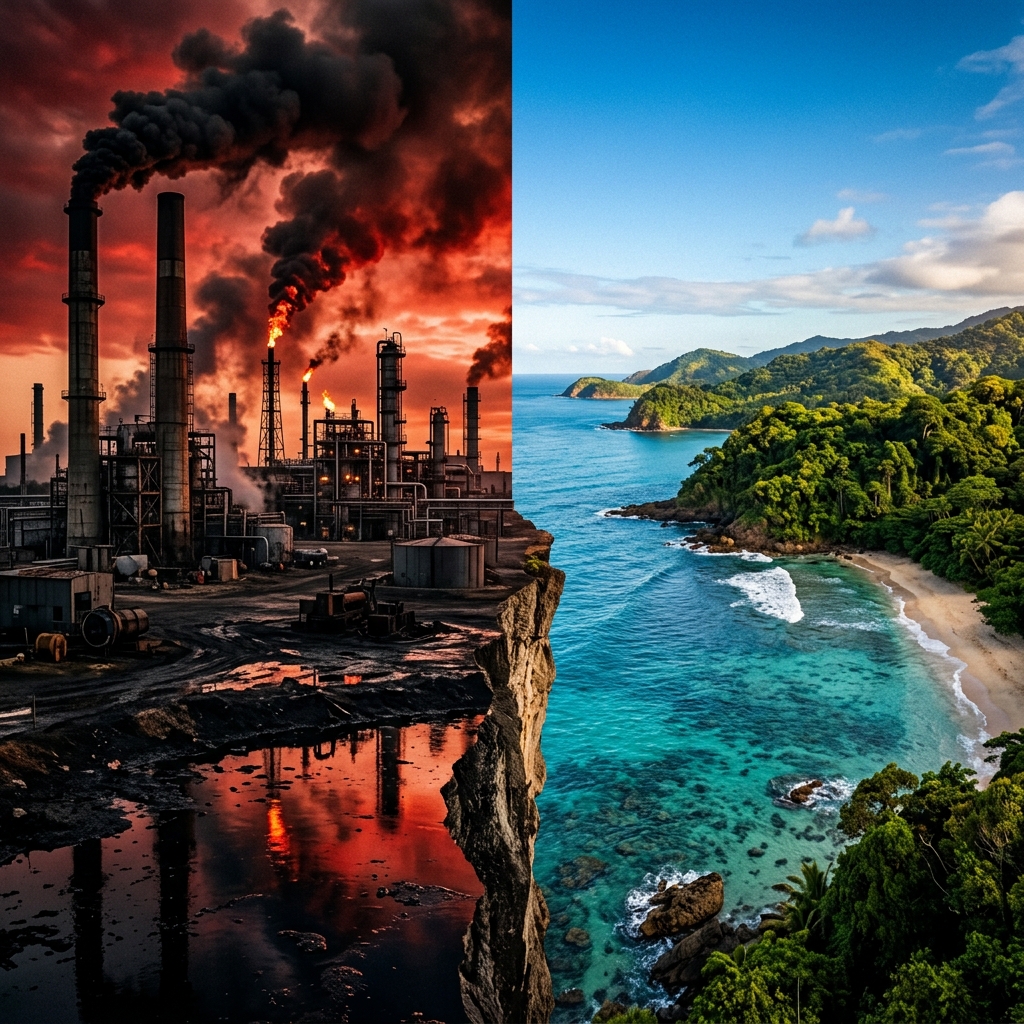
Aramco’s ESG strategy is perhaps the most psychologically sophisticated misdirection campaign in corporate history. The company is the single largest contributor to global carbon emissions ever — responsible for approximately 59.26 gigatons of CO₂ since 1965. Yet it has managed to maintain institutional investor support through a series of clever psychological maneuvers.
🎯 The Scope 1-2 Anchor: Hiding 85% of the Problem
Aramco has pledged net-zero Scope 1 and Scope 2 emissions by 2050. This sounds impressive until you understand the psychology:
- Scope 1: Direct emissions from Aramco’s own operations (drilling, refining)
- Scope 2: Emissions from purchased electricity/energy
- Scope 3: Emissions from the actual burning of Aramco’s oil and gas by consumers
Scope 3 emissions account for 85%+ of Aramco’s total climate impact. By anchoring the conversation on Scope 1 and 2 (which represent ~15% of the problem), Aramco uses classic anchoring bias to make its climate commitment seem substantial when it actually addresses a fraction of its impact.
💨 Blue Hydrogen: The Halo Effect in Action
Aramco’s aggressive push into blue hydrogen is a textbook application of the halo effect:
- “Hydrogen” is associated with clean energy in public consciousness
- The word “blue” sounds environmentally friendly (sky, ocean, clean)
- In reality, blue hydrogen is made from natural gas with carbon capture — which has significant methane leakage problems
- Studies suggest blue hydrogen may produce 20% more greenhouse gases than burning natural gas directly
By positioning as the world’s largest “blue hydrogen producer,” Aramco creates a psychological association between the company and clean energy — despite the product being fundamentally a fossil fuel derivative. This is the halo effect at corporate scale.
🌲 Carbon Capture: The $1.5B Distraction
Aramco has invested $1.5 billion in Carbon Capture and Storage (CCS) technology. Psychologically, this investment serves a crucial function: it provides a tangible, visible commitment that satisfies the human need for concrete evidence of environmental concern.
However, Aramco’s CCS capacity captures approximately 44 million tonnes of CO₂ per year — less than 0.5% of its annual Scope 3 emissions. The $1.5B investment is psychologically effective not because of its impact, but because it gives ESG analysts, governments, and investors a “permission structure” to continue supporting the company.
🏁 Chapter 6: Competitive Psychology — The Untouchable Giant
🏆 Global Energy Supermajor Comparison
| Metric | Saudi Aramco | ExxonMobil | Shell | Chevron | TotalEnergies |
| Market Cap | $1.78T | $530B | $220B | $310B | $160B |
| Revenue (2024) | $494.9B | $344.6B | $280.1B | $196.9B | $218.9B |
| Net Income | $106.2B | $33.7B | $19.4B | $21.4B | $15.8B |
| Proven Reserves | 258.8B bbl | 16.9B bbl | 9.4B bbl | 11.1B bbl | 11.0B bbl |
| Lifting Cost/bbl | $3.00 | $10.50 | $12.00 | $10.00 | $11.50 |
| Dividend Yield | ~6.5% | ~3.3% | ~3.8% | ~4.1% | ~5.2% |
The comparison table above creates a powerful contrast effect — Aramco’s metrics are so dramatically superior in every category that competitors appear almost insignificant. This is itself a psychological tool: the sheer scale of the gap makes competition feel futile, which discourages aggressive competitive behavior from rivals.
🔮 Chapter 7: Strategic Outlook — Vision 2030 & the Post-Oil Gamble

Aramco sits at the center of the most ambitious national transformation in modern history — Saudi Vision 2030. The company is expected to fund the Kingdom’s diversification away from oil dependence… while simultaneously remaining maximally profitable as an oil company. This creates a fascinating cognitive dissonance.
🏗️ NEOM & Mega Projects: The Commitment Escalation Trap
Aramco’s dividends are the primary funding source for Vision 2030 mega projects — NEOM ($500B), The Line, Red Sea tourism, AMAALA, and more. This creates a commitment escalation dynamic: the more money invested in these projects, the more Aramco must continue generating massive cash flows, which means maximizing oil production, which means doubling down on the very commodity the country claims to be moving away from.
⚗️ Liquids-to-Chemicals: The Quiet Pivot
Perhaps Aramco’s most psychologically sophisticated strategy is its liquids-to-chemicals program — planning to convert 4 million barrels/day into petrochemicals by 2030, bypassing refining entirely. The psychology here is subtle:
- Chemicals are perceived as a “value-added” industry — not “dirty fossil fuels”
- The SABIC acquisition ($69B) creates sunk cost commitment to the chemicals strategy
- Petrochemicals have less energy transition risk than transport fuels — plastics, fertilizers, and industrial chemicals have no viable mass-market alternatives
- The pivot allows Aramco to maintain oil extraction volumes while changing the narrative from “oil company” to “materials company”
📊 Chapter 8: Psychology Scorecard — Detailed Ratings
🧠 Overall Psychology Score: 88/100
| Market Dominance & Scarcity Psychology | 97/100 ⭐⭐ |
| Financial Strength & Investor Psychology | 95/100 ⭐⭐ |
| Operational Efficiency & Cost Perception | 94/100 ⭐ |
| Geopolitical Leverage & Authority | 92/100 ⭐ |
| Strategic Narrative & Future-Proofing | 72/100 |
| Corporate Governance & Transparency | 65/100 |
| Brand & Communication Psychology | 78/100 |
| ESG & Sustainability Perception | 45/100 |
✅ Chapter 9: Strengths & Weaknesses — The Psychological Balance Sheet
💪 Psychological Strengths
- Unmatched Cost Advantage ($3/barrel): Creates a perception of economic invincibility. Aramco is profitable at oil prices where every competitor is bleeding — this isn’t just a financial advantage, it’s a psychological weapon that deters competitive investment.
- Spare Capacity Monopoly: The ability to add or remove 2-3 million barrels/day of production within weeks gives Aramco control over global market psychology — no other entity can move oil prices with a single decision.
- Sovereign Backing: Government ownership transforms corporate risk into sovereign risk — triggering authority bias that makes investors perceive Aramco as essentially default-proof.
- 258.8 Billion Barrels of Reserves: The sheer enormity of proven reserves (50+ years of production) creates a permanence illusion — the feeling that Aramco will exist and profit forever.
- Dividend Reliability: 20+ years of consistent, growing dividends create habitual income dependence that makes selling psychologically painful — classic loss aversion lock-in.
- Vertical Integration: Control from wellhead to gas station creates perceived self-sufficiency that reduces supply chain anxiety in investors’ minds.
⚠️ Psychological Weaknesses
- Energy Transition Existential Risk: Despite being dismissed by Aramco, the energy transition creates persistent background anxiety among forward-looking investors. Each EV sales record and solar cost reduction chips away at the “oil forever” narrative.
- ESG Fund Exclusion: Aramco’s exclusion from major ESG indices (MSCI ESG, FTSE4Good) creates a negative social proof signal — “If the world’s smartest institutional investors are avoiding Aramco, maybe I should too.”
- Government Control: 98.2% government ownership means minority shareholders have zero strategic influence. This violates the illusion of control — a psychological need investors have to feel they can influence outcomes.
- Dividend Sustainability Gap: The 2024 dividend ($124.3B) exceeded free cash flow ($84.5B) by ~$40B. This gap, funded by debt, creates cognitive dissonance between “sustainable income” messaging and financial reality.
- Geopolitical Vulnerability: The 2019 Abqaiq attack proved that Aramco’s infrastructure can be disrupted by relatively low-cost drone attacks — a vulnerability that creates latent anxiety in institutional investors.
- Climate Accountability Risk: As the world’s largest historical emitter (59.26 GT CO₂), Aramco faces growing moral liability — a psychological burden that could translate into legal and financial liability as climate litigation increases globally.
📝 Final Verdict
Saudi Aramco is not just a company — it’s a psychological institution that has mastered the art of making itself feel indispensable. Through a combination of geological fortune, geopolitical leverage, and sophisticated behavioral manipulation, Aramco has created a position where the world feels psychologically incapable of functioning without it.
The company’s $3/barrel cost advantage creates perception of invincibility. Its spare capacity monopoly weaponizes scarcity at global scale. Its sovereign-backed dividends exploit loss aversion to lock in investor loyalty. And its ESG misdirection — from blue hydrogen to selective scope targeting — maintains institutional support despite being history’s largest carbon emitter.
The real question isn’t whether Aramco will remain profitable in the next decade — it almost certainly will. The real question is existential: can the world’s largest oil company survive a world that no longer needs oil? For now, the answer is: it doesn’t need to answer that question, because that world is still decades away. And in the meantime, the dividend checks keep coming.
Psychology Score: 88/100 — Saudi Aramco achieves near-perfect scores in market dominance psychology, financial manipulation, and geopolitical leverage. Its weaknesses lie in ESG perception, governance transparency, and the slow-burning existential threat of energy transition. This is a company that doesn’t just participate in markets — it psychologically constructs the reality in which those markets operate.
🧠 Want a Psychology Audit for Your Brand?
I’m Muhammad Shahzeb — an MSc Industrial Psychologist & Full-Stack Developer. I apply behavioral science to branding, web design, and conversion optimization. Let’s analyze your brand’s psychological impact.
📚 References & Sources
- Saudi Aramco. “Annual Reports 2020–2024.” aramco.com
- International Energy Agency (IEA). “World Energy Outlook 2024.” iea.org
- OPEC. “Annual Statistical Bulletin 2024.” opec.org
- Heede, R. (2019). “Carbon Majors: Updating activity data, adding entities, & calculating emissions.” Climate Accountability Institute
- Cialdini, R. B. (2006). Influence: The Psychology of Persuasion. Harper Business.
- Kahneman, D. (2011). Thinking, Fast and Slow. Farrar, Straus and Giroux.
- Thaler, R. H. (2015). Misbehaving: The Making of Behavioral Economics. W. W. Norton.
- Bloomberg. “Saudi Aramco Company Profile & Financial Data.” bloomberg.com
- Reuters. “Saudi Aramco News & Analysis 2023–2025.”
- MSCI ESG Research. “Saudi Aramco ESG Ratings.” msci.com
- S&P Global Commodity Insights. “Saudi Arabia Oil Production Data.”
Audit conducted by Muhammad Shahzeb — MSc Industrial & Organizational Psychology | Brand Psychology Specialist | Full-Stack Web Developer
Learn more about my approach →
Key Findings
- Aramco's $3/barrel lifting cost creates psychological pricing dominance — competitors can never match perceived value
- Spare capacity monopoly weaponizes scarcity psychology — only company that can flood or starve global oil supply at will
- $124.3B dividend payout exploits loss aversion — investors fear losing income more than they fear energy transition
- Government-backed guaranteed dividend leverages authority bias — sovereign backing removes perceived default risk
- Vision 2030 narrative uses commitment bias — framing fossil fuel investment as funding Saudi Arabia's green future
- Asia-first demand strategy exploits status quo bias — locking in 70%+ exports to growing markets resistant to change
- Net-zero 2050 pledge (Scope 1-2 only) uses anchoring — diverting attention from 85%+ Scope 3 emissions reality
- SABIC chemicals acquisition uses the sunk cost fallacy — $69B acquisition justifies continued fossil fuel expansion
- World's largest IPO created social proof — $1.7T valuation signals market confidence despite structural risks
- Blue hydrogen positioning uses the halo effect — marketing gas+CCS as "clean energy" to maintain fossil relevance
Overall Psychology Score
Saudi Aramco scores 88/100 in our comprehensive psychology audit covering consumer behavior strategies, UX design principles, and psychological marketing effectiveness.
The detailed dimension scores are in the audit's Psychology Scorecard chapter.
High impactMuhammad Shahzeb
MSc Industrial Psychologist, specializing in consumer behavior, UX psychology, and brand strategy analysis. Helping brands understand the psychology behind their success.
About Muhammad Shahzeb →