
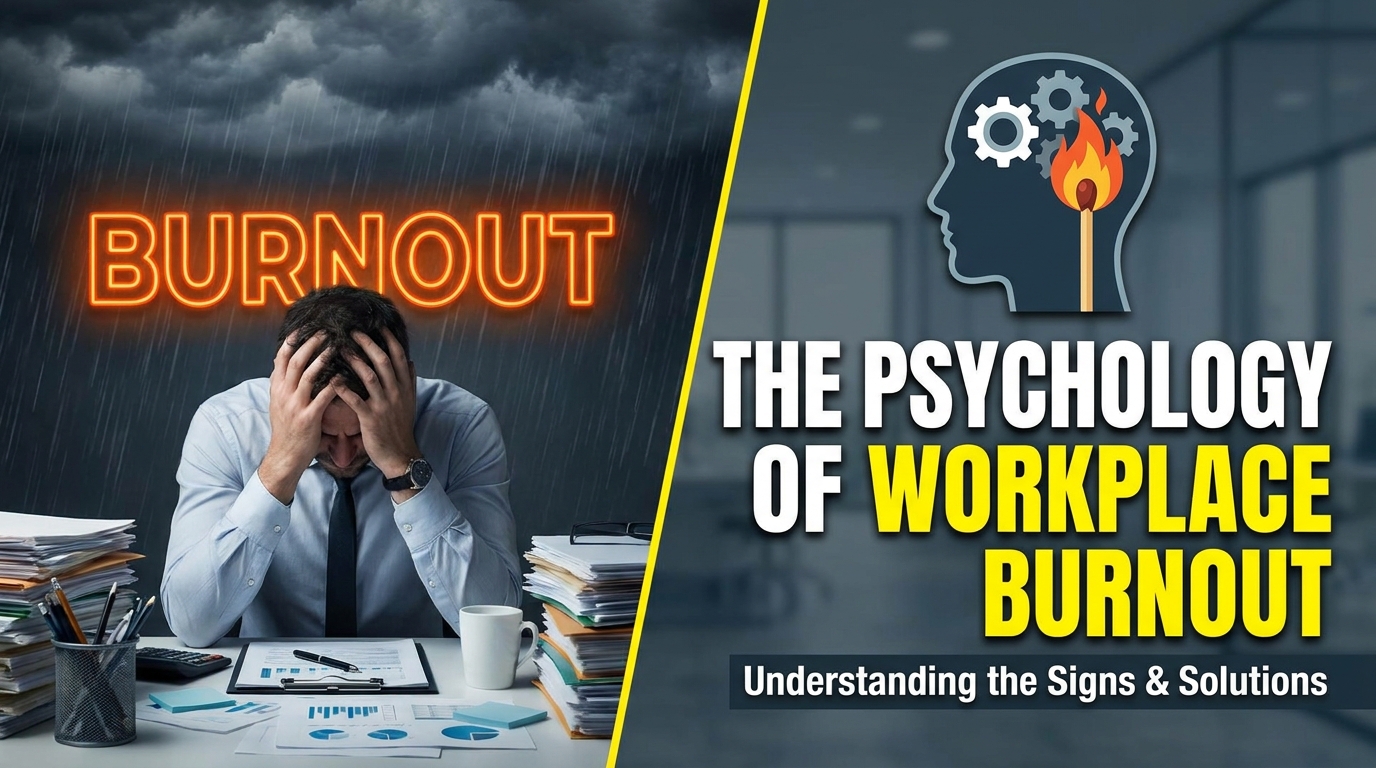
You wake up exhausted. You drag yourself through meetings you don’t care about. You stare at your screen for hours, producing almost nothing. At night, you can’t sleep — your mind races with tomorrow’s to-do list while your body screams for rest. On weekends, you feel guilty for resting. On Monday mornings, you feel something between dread and despair. If this sounds like your life, you’re not lazy. You’re not weak. You’re experiencing what the World Health Organization now officially classifies as an occupational phenomenon — and it’s called burnout.
According to Gallup’s 2026 State of the Global Workplace report, 77% of employees have experienced burnout at their current job, with 42% reporting chronic burnout — meaning they feel it most or all of the time. The American Psychological Association (APA) reports that workplace stress costs US employers over $500 billion annually in lost productivity, absenteeism, and healthcare costs. And here’s the statistic that should alarm every CEO on the planet: burnout-driven turnover has increased by 48% since 2024.
As an Industrial & Organizational Psychologist (MSc) who also builds high-performance digital experiences as a Full-Stack Web Developer, I see burnout from both sides. I’ve studied the psychological mechanisms that cause it. I’ve consulted with organizations struggling to retain talent because of it. And as someone who has personally navigated the brutal demands of running two companies across three countries — I’ve lived it.
In this comprehensive guide, I’m going to break down the real psychology behind workplace burnout, reveal why everything you’ve been told about it is probably wrong, and give you a science-backed framework to not just recover — but to burnout-proof your career.
“Burnout is not the price of ambition. It’s the price of working in a system designed without humans in mind.”
— Christina Maslach, PhD — Creator of the Maslach Burnout Inventory
Whether you’re a professional who can’t remember the last time work felt meaningful, a manager watching your team disintegrate, or a business owner wondering why your best people keep leaving — this article will fundamentally change how you understand exhaustion.
🔥 What Is Burnout? It’s Not What You Think
Let’s start by destroying a myth: burnout is not just “being tired.” Tired is what happens after a long day. Burnout is what happens after months or years of a fundamentally broken relationship between a person and their work.
In 2019, the World Health Organization (WHO) officially included burnout in the ICD-11 (International Classification of Diseases) — not as a medical condition, but as an “occupational phenomenon” resulting from chronic workplace stress that has not been successfully managed. The official definition identifies three core dimensions:
- Emotional Exhaustion: Feelings of energy depletion, chronic fatigue, and being emotionally drained — the sense that you have nothing left to give. This isn’t the tiredness you fix with a weekend off; it’s a bone-deep depletion that sleep doesn’t resolve.
- Depersonalization (Cynicism): An increasing mental distance from your job — feeling negative, cynical, or detached from your work and colleagues. You stop caring about outcomes. People become “tasks” rather than humans.
- Reduced Professional Efficacy: A growing sense of incompetence and unproductivity — even when you’re objectively performing adequately. You feel like a fraud. Your confidence erodes. Imposter syndrome becomes your default state.
💡 Clinical Insight: In my practice as an Industrial Psychologist, I’ve observed that most people only recognize burnout at Stage 3 (reduced efficacy) — when they start “failing” at work. But the first stage (emotional exhaustion) typically begins 6–12 months earlier. By the time you notice you’re burned out, you’ve been burning out for nearly a year. Early detection is everything.
Burnout vs. Depression: A Critical Distinction
Many people confuse burnout with clinical depression — and while they share symptoms (fatigue, apathy, cognitive impairment), they are psychologically distinct:
- Burnout is domain-specific: It’s triggered by and contained within your work environment. Remove the stressor (change jobs, take extended leave), and symptoms typically improve within weeks
- Depression is pervasive: It affects all domains of life — work, relationships, hobbies, self-care — and doesn’t resolve simply by changing environments
- Burnout follows a trajectory: Enthusiasm → Stagnation → Frustration → Apathy → Burnout. Depression can appear without clear stages
- Burnout responds to systemic change: Organizational interventions (workload adjustment, autonomy, recognition) can reverse burnout. Depression requires clinical treatment
However — and this is critical — untreated burnout can trigger clinical depression. A 2025 meta-analysis in The Lancet Psychiatry found that employees experiencing chronic burnout for more than 18 months had a 2.8x higher risk of developing Major Depressive Disorder. Burnout is not “just stress.” Left unchecked, it becomes a clinical emergency.
🧠 The Neuroscience of Burnout: What’s Actually Happening in Your Brain
Understanding burnout requires understanding your brain’s stress architecture — and why modern work environments are systematically dismantling it.

The HPA Axis: Your Built-In Stress System
When you encounter a stressor, your brain activates the Hypothalamic-Pituitary-Adrenal (HPA) Axis — a neuroendocrine cascade designed for short-term survival threats:
- Hypothalamus detects threat → releases CRH (Corticotropin-Releasing Hormone)
- Pituitary Gland responds → releases ACTH (Adrenocorticotropic Hormone)
- Adrenal Glands fire → flood your system with cortisol and adrenaline
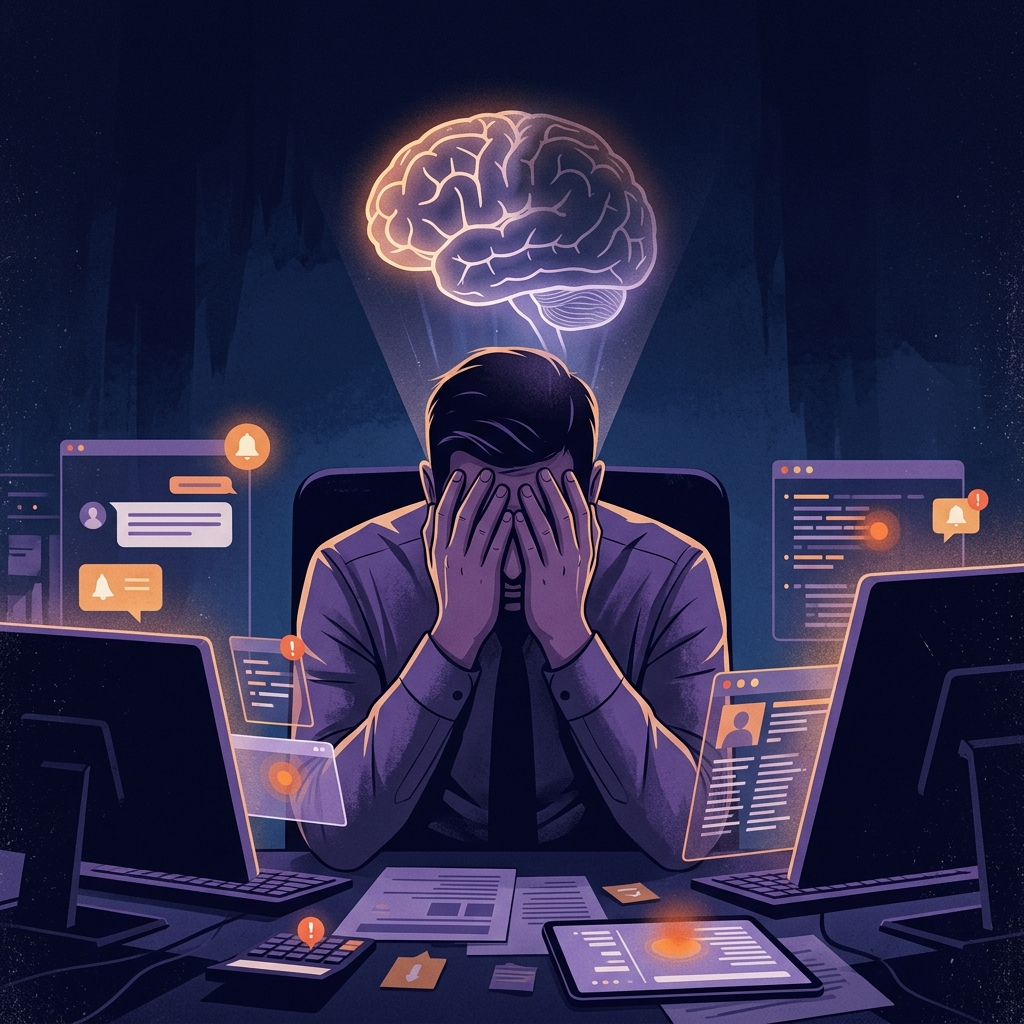
This system evolved for acute threats — a predator, a rival, a natural disaster. It was designed to activate for minutes, then deactivate. But in the modern workplace, the HPA axis is activated for 8–12 hours daily by emails, Slack notifications, back-to-back Zoom calls, impossible deadlines, and the ambient anxiety of job insecurity.
What Chronic Cortisol Does to Your Brain
When cortisol stays elevated for months, the damage is neurological — and measurable:
- Prefrontal Cortex Shrinkage: The brain region responsible for decision-making, planning, and emotional regulation literally loses gray matter volume. This is why burned-out people make poor decisions and have emotional outbursts — their executive function hardware is damaged.
- Hippocampal Damage: The hippocampus (memory center) is particularly vulnerable to cortisol. Chronic burnout impairs memory consolidation and recall — that “brain fog” you experience isn’t imaginary, it’s neurological.
- Amygdala Hyperactivation: While the prefrontal cortex shrinks, the amygdala (fear center) grows more reactive. Minor stressors trigger disproportionate anxiety responses. A mildly critical email feels like an existential threat.
- Default Mode Network Disruption: The brain’s “resting network” — essential for creativity, self-reflection, and emotional processing — becomes impaired. This is why burned-out people feel disconnected from themselves and lose their creative spark.
“Your brain on burnout isn’t just tired — it’s structurally altered. The good news? Neuroplasticity means these changes are reversible. But only if you intervene.”
⚡ The Cognitive Load Crisis: Why 2026 Burnout Is Different
Here’s what makes burnout in 2026 fundamentally different from burnout in 2010 or even 2020: it’s no longer primarily about working too many hours. It’s about cognitive load.
Research published in the Harvard Business Review (2026) reveals that the average knowledge worker now:
- Uses 11+ digital tools daily (Slack, Teams, Email, Asana, Jira, Notion, Zoom, Google Workspace, CRM, analytics, etc.)
- Experiences 56 context switches per day (switching between apps, tasks, and communication channels)
- Receives 121 emails and 45+ Slack/Teams messages daily
- Spends 58% of their workday on “work about work” (status updates, tool management, meetings about meetings) rather than actual productive work
This creates what cognitive psychologists call “attention residue” — when you switch from Task A to Task B, a portion of your cognitive resources remains stuck on Task A. With 56 context switches daily, your brain is never fully focused on anything. You’re running at 60% capacity all day, every day, while spending 100% of your energy.
The Tool Sprawl Paradox
Here’s the cruel irony: every tool designed to “boost productivity” actually fragments attention further. Each new app adds:
- A new notification channel to monitor
- A new interface to learn and maintain
- A new source of “ambient urgency” (unread badges, status indicators)
- A new decision point competing for prefrontal cortex resources
A 2026 Microsoft Work Trend Index found that employees who use 6+ collaboration tools report 3.2x higher burnout rates than those using 3 or fewer. The technology meant to help us is literally burning us out — not through overwork, but through cognitive fragmentation.
💡 Clinical Insight: I call this “Digital Cognitive Burnout” (DCB) — a burnout subtype I encounter constantly in my consulting practice. The employee isn’t working long hours. They’re often working standard 40-hour weeks. But their brain is processing the cognitive equivalent of an 80-hour week because every hour involves dozens of micro-decisions, tool switches, and interrupted thought patterns. The exhaustion is real, but the cause is invisible — which makes it even more psychologically damaging, because the person thinks they’re “just not tough enough.”
😶 From Quiet Quitting to Revenge Quitting: The Burnout Pipeline
Burnout doesn’t stay contained. Unaddressed, it follows a predictable psychological escalation that is reshaping the global workforce in 2026.
Stage 1: The “Jolt” — The Moment Everything Changes
Turnover researchers have identified that disengagement rarely happens gradually. Instead, it begins with a “jolt” — a specific moment where an employee suddenly reinterprets their relationship with their employer:
- A promised promotion that never materializes
- A restructuring that eliminates their favorite project
- Watching a colleague burn out and seeing management’s indifference
- Being denied a reasonable accommodation (flexible hours, remote work)
- Discovering a significant pay inequity
The jolt doesn’t cause disengagement — it triggers a cognitive reappraisal. The employee suddenly sees every past grievance through a new lens. What they previously tolerated as “just how things are” is now interpreted as “I’m being exploited.”
Stage 2: Quiet Quitting — Psychological Withdrawal
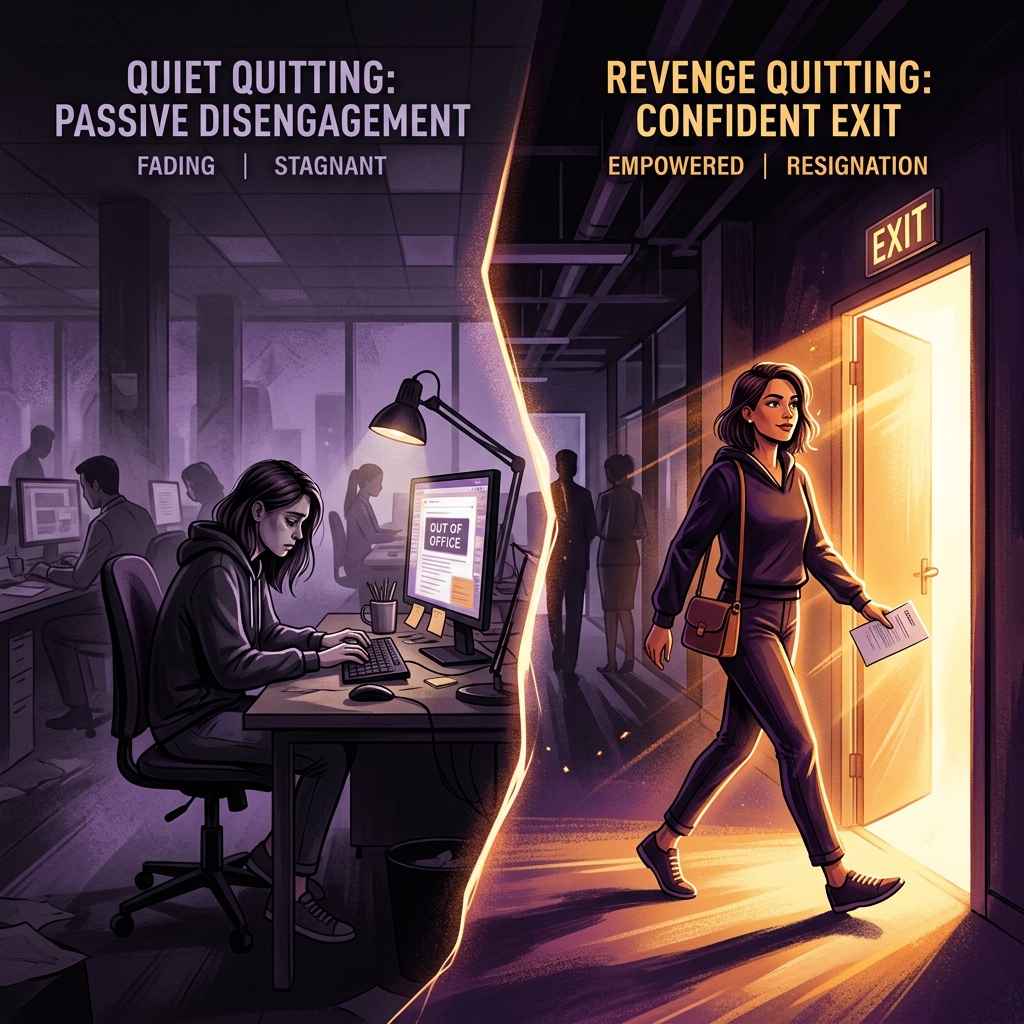
“Quiet quitting” — doing the bare minimum required to keep your job without going above and beyond — is the brain’s self-preservation mechanism against burnout. It’s not laziness; it’s psychological triage.
From an Industrial Psychology perspective, quiet quitting represents a recalibration of the psychological contract — the unwritten agreement between employee and employer about mutual expectations. When the employee perceives that the organization has broken its side of the contract (through overwork, underpay, lack of recognition, or broken promises), they withdraw discretionary effort to restore equity.
Gallup’s 2026 data reveals that 59% of the global workforce is currently “quiet quitting” — engaged enough to show up and complete assigned tasks, but emotionally checked out. They’re not building your culture. They’re not innovating. They’re surviving.
Stage 3: Revenge Quitting — The Breaking Point
In 2026, a new and more dramatic trend has emerged: “revenge quitting” — employees who don’t just leave, but leave loudly, deliberately, and often destructively.
Unlike quiet quitting (which is passive), revenge quitting is an active assertion of agency driven by accumulated resentment. It manifests as:
- Public resignations (viral LinkedIn posts, company-wide emails detailing grievances)
- Strategic timing (quitting before a critical deadline, during a major project, or right before their knowledge would be hardest to replace)
- Zero knowledge transfer (refusing to train replacements or document processes)
- Talent poaching (taking team members with them to a competitor)
A 2026 Glassdoor survey found that 28% of employees who quit in the past year described their departure as “revenge quitting” — a figure that has tripled since 2023.
💡 Clinical Insight: The Quiet Quitting → Revenge Quitting pipeline is not a character flaw. It is a predictable psychological response to chronic burnout in environments where employees feel powerless. In organizational psychology, we call this the “learned helplessness → reactance” cycle. First, repeated negative experiences teach the employee that their efforts don’t matter (helplessness). Then, when helplessness becomes intolerable, it flips into psychological reactance — an aggressive reassertion of autonomy. The revenge quit is the reactance response.
🎯 The 6 Root Causes of Burnout (It’s the System, Not You)
Christina Maslach — the psychologist who literally invented the burnout construct — identified six organizational factors that cause burnout. Notice something critical: none of them are about individual weakness.
- Workload Overload: Chronic, unsustainable demands that exceed available resources. Not just volume — complexity, ambiguity, and emotional labor count.
- Lack of Control: Insufficient autonomy over how, when, or where work is done. Micromanagement is a burnout accelerant.
- Insufficient Reward: Not just financial. Inadequate recognition, advancement opportunity, or intrinsic satisfaction. When effort goes unacknowledged, motivation dies.
- Breakdown of Community: Isolation, toxic colleagues, or a culture of competition rather than collaboration. Humans are social creatures — workplace loneliness is a burnout multiplier.
- Absence of Fairness: Perceived inequity in pay, promotions, workload distribution, or decision-making. Unfairness activates the brain’s threat detection system (anterior insula), creating chronic stress independent of workload.
- Values Conflict: A mismatch between personal values and organizational behavior. If you believe in quality but are forced to cut corners, or believe in ethics but see leadership act dishonestly — the cognitive dissonance is psychologically corrosive.
Here’s the research that should change every manager’s perspective: a 2026 study published in the Journal of Organizational Behavior analyzed 50,000+ employees across 34 countries and found that organizational factors explained 78% of burnout variance, while individual factors (personality, coping style, resilience) explained only 22%.
Translation: If your employees are burning out, the problem is almost certainly your organization, not your people.
📊 Who Burns Out Most? The Demographics of Exhaustion
Burnout doesn’t affect everyone equally. Understanding the demographic patterns reveals important psychological and structural factors:
By Generation
- Gen Z (born 1997–2012): Highest reported burnout at 83%. Driven by financial anxiety (student debt, housing crisis), career uncertainty in the AI era, and the “always-on” digital culture they’ve never known life without
- Millennials (born 1981–1996): Second highest at 79%. The “sandwich generation” — managing career demands while caring for aging parents and young children simultaneously
- Gen X (born 1965–1980): 68% burnout rate. Often in middle management — the “pressure layer” between executive demands and team needs, with accountability for outcomes but limited authority
- Boomers (born 1946–1964): 52% burnout rate. Lower overall, but those still working often report “alienation burnout” — feeling out of place in rapidly digitizing workplaces
By Role
- Middle Managers: The most burned-out cohort in any organization. They absorb pressure from above and below, are responsible for team wellbeing while having minimal structural power, and are frequently the first to be “restructured” during layoffs
- Healthcare Workers: Post-pandemic burnout remains at crisis levels. The WHO designated 2026 a “year of action” on healthcare worker mental health
- Tech Workers: AI disruption anxiety layered on top of “hustle culture” and 24/7 deployment cycles
- Teachers & Educators: Chronic underfunding, expanding responsibilities, and emotional labor with students facing their own mental health crises
🛡️ 9 Evidence-Based Strategies to Recover From (and Prevent) Burnout
Here’s where we move from understanding to action. These strategies are drawn from Cognitive Behavioral Therapy (CBT), Industrial-Organizational Psychology, psychosocial risk management frameworks, and neuroscience research. They work at both individual and organizational levels.
Strategy 1: The Cognitive Load Audit — Map Your Mental Drain
Before you can fix burnout, you need to diagnose where your cognitive energy actually goes. For one full work week, track every activity in three categories:
- 🟢 Deep Work: Focused, meaningful tasks that use your core skills (writing, designing, coding, strategizing)
- 🟡 Shallow Work: Administrative tasks that require attention but not expertise (emails, scheduling, status updates)
- 🔴 Friction Work: Tasks caused by organizational dysfunction (searching for information across tools, waiting for approvals, redundant meetings, tool troubleshooting)
Most burned-out professionals discover that 60–70% of their energy goes to Shallow and Friction Work. The solution isn’t working harder on Deep Work — it’s systematically eliminating Friction Work. Bring your audit to your manager. The data speaks louder than complaints.
Strategy 2: The “Right to Disconnect” Boundary
Several European countries (France, Portugal, Belgium, Spain) have legislated the “right to disconnect” — making it illegal for employers to contact workers outside of working hours. But you don’t need legislation to implement this personally:
- Set a hard shutdown time — and communicate it clearly. “I’m offline after 6 PM. Non-emergencies will be addressed tomorrow.”
- Remove work apps from your personal phone. If your company requires mobile access, use a separate work device that stays in a drawer after hours.
- Create transition rituals: A specific action (a walk, changing clothes, closing your laptop with a deliberate gesture) that signals to your brain: “Work mode is now OFF.”
Research from the University of Zurich (2025) found that employees who maintained consistent after-hours disconnection showed 34% lower cortisol levels and 41% higher reported job satisfaction after 8 weeks.
Strategy 3: Strategic Recovery — Not Just Rest, But the RIGHT Rest
Not all recovery is equal. Psychologist Sabine Sonnentag’s research on recovery experiences identifies four critical components:
- Psychological Detachment: Mentally disconnecting from work — not just physically leaving the office. Ruminating about work at home is not recovery.
- Relaxation: Low-activation pleasant activities — reading, gentle exercise, nature exposure. Not doom-scrolling social media (which increases cortisol).
- Mastery Experiences: Learning or doing something challenging but enjoyable outside of work — playing music, cooking a complex meal, learning a language. This rebuilds your sense of competence that burnout erodes.
- Autonomy: Choosing how you spend your free time, rather than feeling obligated to social commitments or household tasks. The perception of control is itself restorative.
The key insight: passive rest (watching TV, scrolling) provides minimal recovery. Active recovery (mastery + autonomy) is what actually restores depleted cognitive resources.
Strategy 4: Cognitive Reappraisal — Change Your Brain’s Interpretation
CBT teaches us that it’s not events that cause distress, but our interpretation of events. Burned-out people develop characteristic cognitive distortions:
- “I should be able to handle this” → Reframe: “This workload would overwhelm anyone. The system is the problem, not my capacity.”
- “If I can’t perform perfectly, I’m failing” → Reframe: “Perfectionism under these conditions is self-harm. Good enough is genuinely good enough.”
- “Taking a break means I’m weak” → Reframe: “Recovery is a performance strategy. Elite athletes don’t train 24/7 — they periodize rest.”
- “Everyone else seems fine” → Reframe: “77% of employees report burnout. Others are struggling too — most just hide it.”
Practice this: every time you notice a self-critical burnout thought, write it down, identify the distortion, and write a rational alternative. This isn’t positive thinking — it’s accurate thinking. And accuracy reduces cortisol.
Strategy 5: The “No Meeting Day” Protocol
Research from MIT Sloan (2026) found that companies implementing one “No Meeting Day” per week saw:
- 73% reduction in employee stress ratings
- 65% increase in perceived productivity
- 44% increase in deep work output
- 26% decrease in after-hours work
If your organization won’t implement this, create your own version: block one full day on your calendar as “Focus Time” with a clear status message. Protect it ruthlessly. One uninterrupted day of deep work can produce more meaningful output than three days of fragmented task-switching.
Strategy 6: Social Connection — The Burnout Buffer
Burnout drives isolation — and isolation accelerates burnout. Breaking this cycle requires intentional social connection, particularly at work:
- Find your “psychological safety partner”: One colleague you can be honest with about your struggles. Research shows that a single high-quality workplace relationship reduces burnout risk by 38%.
- Practice “micro-moments of connection”: A genuine compliment, asking about someone’s weekend with real interest, sharing a moment of humor. These activate the brain’s oxytocin system, directly counteracting cortisol.
- Join or create a peer support group: Monthly lunch conversations with peers at your level who face similar challenges. Normalization (“others feel this too”) is itself therapeutic.
Strategy 7: The Values Realignment Exercise
Values conflict is the deepest and most damaging cause of burnout. When what you do daily contradicts what you believe matters, the psychological toll is enormous.
- List your top 5 core values (e.g., integrity, creativity, family, growth, impact)
- Rate how well your current job aligns with each value (1–10)
- Identify the biggest gaps — these are your burnout drivers
- Create a “Values Action Plan”: For each misaligned value, identify one concrete step to bring your work closer to alignment — or make the decision that this job can never align with your values
Sometimes the most psychologically healthy thing you can do is acknowledge that you’re in the wrong place and begin planning your exit. Not impulsively — strategically.
Strategy 8: Physical Recovery — The Body-Brain Connection
Burnout lives in the body as much as the mind. Your physiological recovery toolkit:
- Exercise: 150 minutes/week of moderate exercise reduces burnout symptoms by 40% (meta-analysis, Occupational Medicine, 2026). Exercise increases BDNF (Brain-Derived Neurotrophic Factor), which repairs the hippocampal damage caused by chronic cortisol.
- Sleep Architecture: Aim for 7–9 hours with consistent sleep/wake times. Burnout disrupts REM sleep — the phase where emotional memories are processed and resolved. Poor sleep = unprocessed stress = amplified burnout. No screens 60 minutes before bed.
- Nature Exposure: Japanese research on “shinrin-yoku” (forest bathing) shows that 20 minutes in natural environments reduces cortisol by 12.4% and activates the parasympathetic nervous system. Even looking at trees through a window helps.
- Breathwork: The physiological sigh (double inhale through nose + extended exhale through mouth) activates the vagus nerve and reduces stress within 60 seconds. Use it before stressful meetings.
Strategy 9: When to Walk Away — The Strategic Exit
Sometimes, the most psychologically healthy response to a toxic system is to leave it. Consider a strategic exit when:
- You’ve attempted all reasonable internal solutions (conversations with managers, boundary-setting, workload negotiation) and nothing has changed
- The organizational culture is fundamentally misaligned with your values
- Your physical health is deteriorating (chronic headaches, digestive issues, immune dysfunction, chest pain)
- You’ve been in the “reduced efficacy” stage for more than 3 months despite intervention efforts
- A mental health professional has recommended environmental change
A strategic exit is not failure — it is an act of psychological self-preservation. Plan it carefully: build savings, network actively, upskill strategically, and leave on your terms. The revenge quit might feel satisfying for a day, but the strategic exit sets up your next decade.
🏢 For Leaders: How to Build a Burnout-Resistant Organization
If you’re a manager, HR professional, or business owner, this section is your intervention playbook:
1. Measure Psychosocial Risk — Not Just Engagement
Traditional “engagement surveys” miss burnout entirely. They ask “Are you happy?” when they should ask “Are you being harmed?” Implement the Copenhagen Burnout Inventory (CBI) or Maslach Burnout Inventory (MBI) quarterly. Measure burnout as an organizational KPI, not an individual problem.
2. Redesign Work Rhythms
Implement “sprint and recover” cycles instead of constant intensity. Organizations like Basecamp and Spotify have adopted 6-week focused sprints followed by 2-week “cool-down” periods for experimentation and recovery. Burnout drops when employees can see the end of the intense period.
3. Train Managers in Psychological First Aid
Middle managers are both the most burned-out and the most influential group in any organization. Train them to recognize burnout signs, have psychologically safe conversations, and escalate concerns without stigma. This single intervention has the highest ROI of any burnout prevention strategy.
4. Implement “Right to Disconnect” Policies
Formalize after-hours communication boundaries. No emails after 6 PM. No Slack on weekends. Leadership must model this behavior — if the CEO sends midnight emails, policy means nothing.
5. Audit Your Tool Stack
Conduct a quarterly “tool consolidation audit.” Every app you add to your organization’s workflow adds cognitive load. If you have 11+ collaboration tools, you’re burning your people out through digital fragmentation. Consolidate ruthlessly.
🔮 The Future of Burnout: What 2027–2030 Will Bring
Based on current trends, psychological research, and my consulting experience, here are my predictions:
- AI-Powered Burnout Detection: Wearable devices and workplace analytics will detect burnout biomarkers (sleep disruption, cortisol patterns, typing speed changes) before the employee consciously recognizes symptoms. Ethical concerns will be massive.
- “Chief Wellbeing Officer” becomes standard: Just as cybersecurity created the CISO role, the burnout crisis will create C-suite leadership dedicated to organizational psychological health.
- 4-Day Work Weeks go mainstream: Pilot programs in UK, Spain, and Japan have shown productivity increases of 20–40% with 4-day weeks. By 2028, this will be a competitive talent advantage that forces industry-wide adoption.
- Burnout litigation increases: As burnout gains clinical recognition, employees will increasingly pursue legal claims against employers whose systems demonstrably cause psychological harm. The precedent is already being set in European courts.
- “Mental Fitness” replaces “Mental Health”: The framing will shift from reactive treatment to proactive training — organizations will invest in psychological resilience the same way they invest in technical skills.
🧠 Struggling With Workplace Burnout? Let’s Talk.
I’m Muhammad Shahzeb — an Industrial & Organizational Psychologist (MSc) and Full-Stack Web Developer who helps professionals and organizations navigate the intersection of human psychology and modern work. Whether you need career coaching to escape a toxic workplace, organizational consulting to build a burnout-resistant culture, or a psychology-driven website that reflects your authentic professional brand — I can help.
❓ Frequently Asked Questions About Workplace Burnout
Is burnout a medical condition?
Burnout is classified by the WHO as an “occupational phenomenon” in the ICD-11, not a medical condition. However, it is clinically recognized as a significant risk factor for depression, anxiety disorders, cardiovascular disease, and immune dysfunction. Many psychologists and psychiatrists now treat burnout as a clinical priority requiring structured intervention.
How long does it take to recover from burnout?
Research suggests that mild burnout can improve within 4–6 weeks of meaningful intervention (workload reduction, boundary-setting, recovery practices). Moderate burnout typically requires 3–6 months. Severe or chronic burnout — especially when it has triggered secondary depression — may require 6–12 months of recovery, often including extended leave and professional psychological support.
Can you be burned out without realizing it?
Absolutely. This is one of burnout’s most dangerous features. The depersonalization dimension creates emotional numbness — you stop feeling distress about your distress. Many burned-out people describe feeling “fine” because they’ve become disconnected from their own emotional experience. Warning signs others notice include irritability, cynicism, forgetfulness, withdrawal from social activities, and frequent illness.
Is burnout the employee’s fault or the employer’s fault?
Research overwhelmingly shows that organizational factors are the primary drivers of burnout — accounting for approximately 78% of the variance. Individual factors (personality, coping style) play a role, but blaming burned-out employees for “not being resilient enough” is both scientifically inaccurate and psychologically harmful. It’s the equivalent of blaming a drowning person for not swimming harder instead of examining who removed the lifeguards.
What’s the difference between burnout and being lazy?
This question itself reveals a harmful cultural assumption. Laziness is a choice; burnout is a consequence. Lazy people don’t want to work. Burned-out people desperately want to work — they’re just psychologically and neurologically unable to perform at their previous level. The exhaustion, cynicism, and reduced efficacy of burnout are not character flaws — they are symptoms of a system that has consumed more than it has given back.
Does remote work cause more or less burnout?
It depends on how remote work is implemented. Well-structured remote work (clear boundaries, asynchronous communication, measured by outcomes not hours) reduces burnout by increasing autonomy. Poorly-structured remote work (always-on Slack culture, surveillance software, longer working hours, social isolation) increases burnout significantly. The medium isn’t the problem — the management philosophy is.
📚 References & Further Reading
- World Health Organization (2019, updated 2026). “Burn-out an ‘occupational phenomenon’: International Classification of Diseases.” who.int
- Maslach, C., & Leiter, M. P. (2016). “Understanding the burnout experience: recent research and its implications for psychiatry.” World Psychiatry, 15(2), 103–111.
- Gallup (2026). “State of the Global Workplace 2026.” gallup.com
- American Psychological Association (2026). “Work and Well-Being Survey: Burnout Edition.” apa.org
- Sonnentag, S. (2012). “Psychological detachment from work during leisure time.” Current Directions in Psychological Science, 21(2), 114–118.
- Microsoft (2026). “2026 Work Trend Index Annual Report.” microsoft.com
- Harvard Business Review (2026). “The Cognitive Load Crisis: Why Knowledge Workers Are Burning Out.” hbr.org
- The Lancet Psychiatry (2025). “Chronic occupational burnout and risk of Major Depressive Disorder: A longitudinal meta-analysis.” thelancet.com
- MIT Sloan Management Review (2026). “The No-Meeting Day Effect: Impact on Productivity and Wellbeing.” sloanreview.mit.edu
- Kahneman, D. (2011). Thinking, Fast and Slow. Farrar, Straus and Giroux.
- Maslach, C. (2003). Burnout: The Cost of Caring. ISHK Publishing.
- Glassdoor (2026). “Employee Sentiment Report: The Rise of Revenge Quitting.” glassdoor.com
- Society for Industrial and Organizational Psychology (2026). “SIOP Top 10 Workplace Trends.” siop.org
- Journal of Organizational Behavior (2026). “Organizational vs. Individual Predictors of Burnout: A Cross-National Analysis.” Wiley Online Library
Written by Muhammad Shahzeb — MSc Industrial & Organizational Psychology | Full-Stack Web Developer | UX Psychology Specialist
Learn more about my approach →