
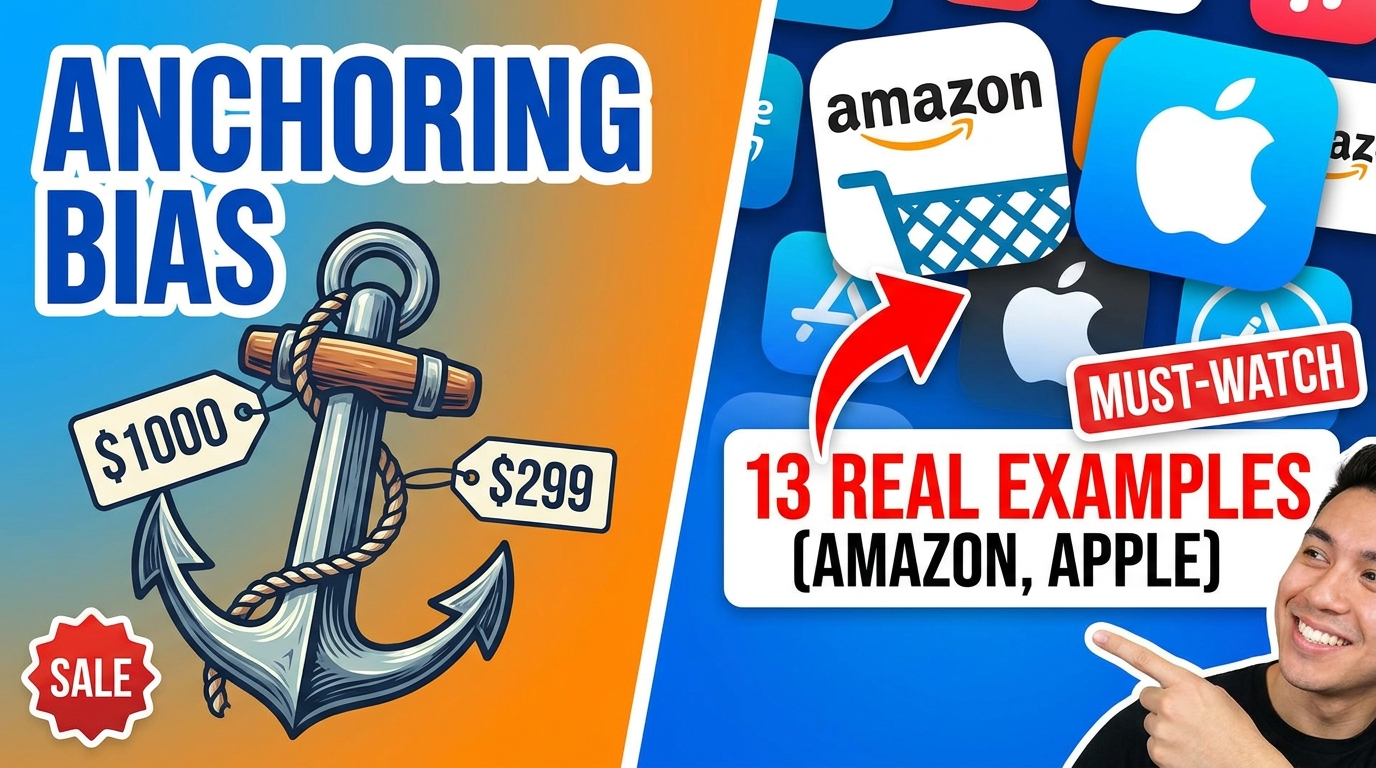
In 2010, Steve Jobs stood on a stage and put a giant number on the screen: $999. That, he said, was what pundits expected the new iPad to cost. He let the number sit there. He talked about the product. The $999 stayed on screen, doing its quiet work on ten million brains. Then the reveal: the iPad would start at $499. The room applauded a price that, an hour earlier, nobody knew was cheap.
That is anchoring bias, executed by the best to ever do it. The first number you encounter in any decision becomes a reference point, and every judgment after it bends toward that number, whether the number is relevant, honest, or completely made up. It is the most reliable finding in behavioral economics and the most widely deployed trick in commerce. I am an Industrial and Organizational Psychologist, and in this article I will show you the research behind anchoring, then walk through 13 real companies using it on you, including one famous case where a retailer removed its anchors and nearly destroyed itself.
“People make estimates by starting from an initial value that is adjusted to yield the final answer. The initial value may be suggested by the formulation of the problem… adjustments are typically insufficient.”
— Amos Tversky & Daniel Kahneman, Science, 1974
🧠 What anchoring bias actually is
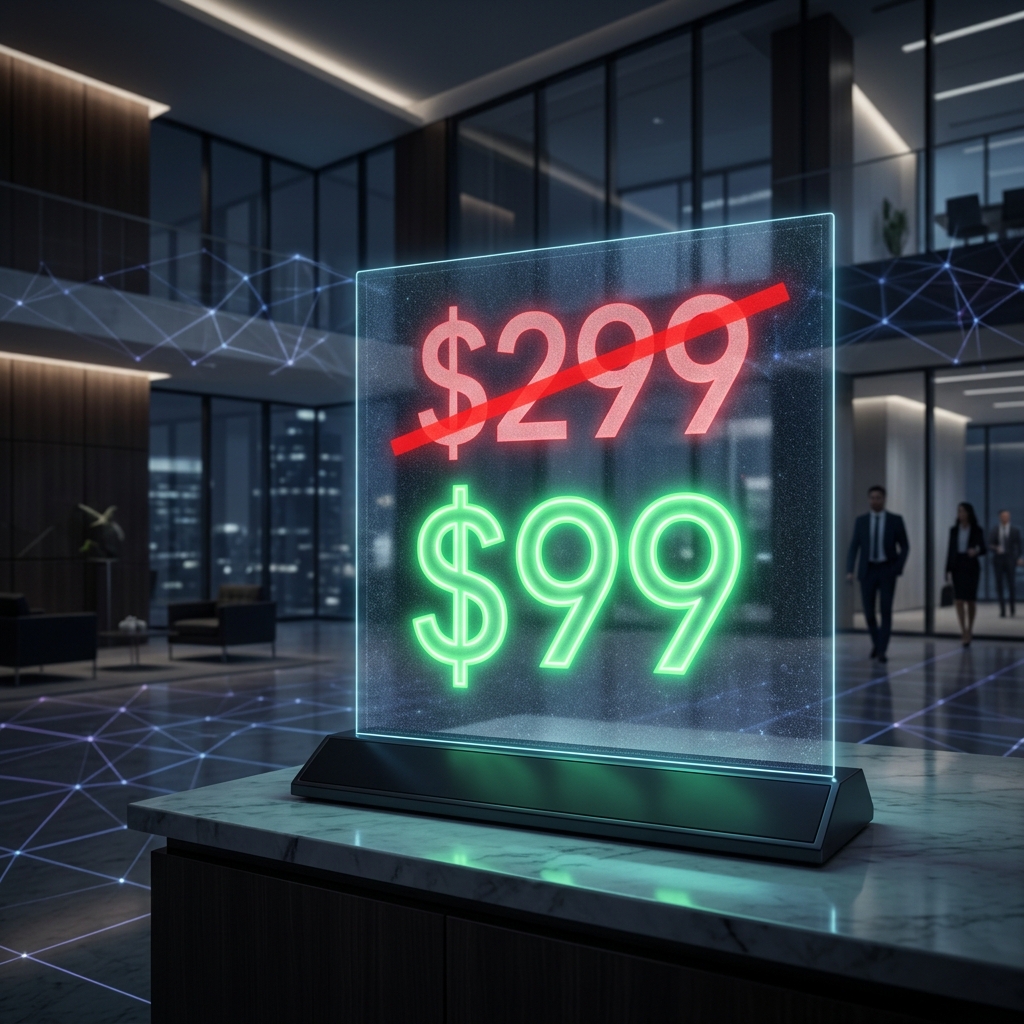
Anchoring is the tendency to rely too heavily on the first piece of information offered when making decisions. The first number sets a mental starting point, and our adjustments away from it are almost always too small.
The founding experiment is one of psychology’s strangest. In 1974, Tversky and Kahneman spun a rigged wheel of fortune in front of participants. The wheel landed on either 10 or 65. Then they asked an unrelated question: what percentage of United Nations countries are African? People who saw 10 guessed around 25% on average. People who saw 65 guessed around 45%. A number from a carnival wheel, which participants knew was random, moved their estimates by twenty percentage points.
Dan Ariely later pushed it further. He had MIT students write down the last two digits of their own social security number, then bid on items like wine and keyboards. Students with high digits bid up to three times more than students with low digits. Their own random ID number anchored what they would pay for wine.
Two things make anchoring dangerous. It works even when the anchor is obviously irrelevant. And it works on experts: in a 1987 study, Northcraft and Neale showed real estate agents a house and manipulated only the listing price. The professionals’ appraisals moved with the fake listing price, and most denied the listing price influenced them at all. You cannot think your way out of an anchor just by knowing it exists. Which is exactly why the companies below never stopped using it.
💰 13 real brands and industries using anchoring on you
1. Amazon: the strikethrough machine
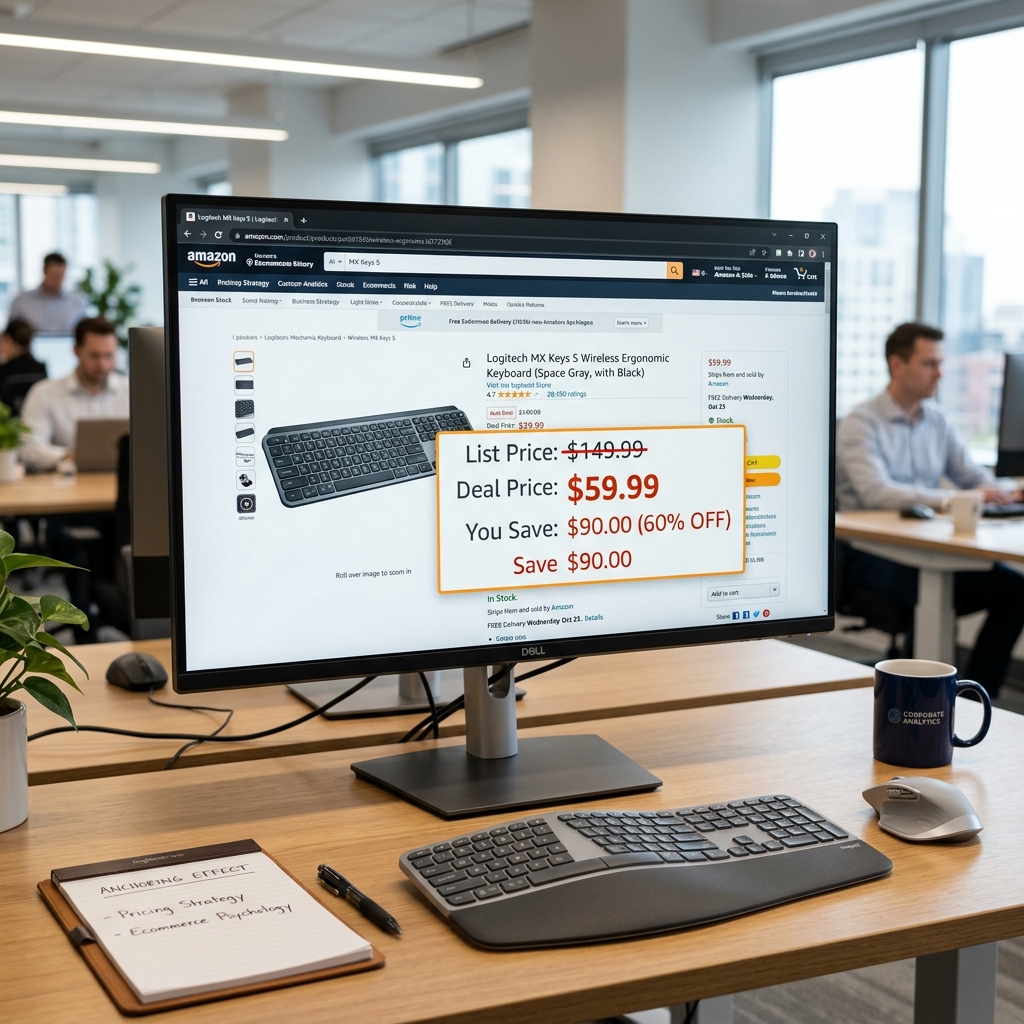
Amazon’s product pages are anchoring at industrial scale. The crossed-out “list price” above the actual price exists for one reason: to give your brain a reference point that makes the real price feel like a win. The list price is often a manufacturer’s suggested figure that almost nobody ever paid. During Prime Day and Black Friday the mechanic intensifies, with “was” prices that sometimes reflect a brief historical high rather than a typical selling price. Price-tracking tools like camelcamelcamel exist almost entirely because shoppers eventually noticed that the anchor and the market price live different lives.
2. Apple: the keynote anchor
The iPad’s $999-to-$499 reveal is the cleanest anchoring performance in corporate history, but Apple runs the play constantly. Product pages list the top configuration alongside the base model, so the $1,599 option makes $999 read as restraint. “Starting at” framing plants the low anchor for the lineup while storage upgrades quietly rebuild the real price. And each year’s launch pricing anchors the next: once the market absorbed a four-digit iPhone price, every subsequent flagship felt normal by comparison. Apple didn’t just price a phone; it re-anchored an entire industry’s ceiling.

3. Starbucks: anchoring an entire category upward
Ariely made this argument in Predictably Irrational, and it holds up. When Starbucks arrived, coffee cost a dollar at the diner. Starbucks could not win a price comparison, so it refused to be compared. Different vocabulary (Tall, Grande, Venti), different atmosphere, different ritual. By breaking the visual and verbal link to diner coffee, Starbucks stopped inheriting the old anchor and installed a new one. Within a decade, five dollars for coffee stopped sounding absurd, and every cafe on earth now prices under the umbrella Starbucks anchored. The sizes themselves anchor too: the Venti’s price makes the Grande feel moderate, and hiding the smaller Short size off the menu pushes the whole ladder up a rung.
4. JCPenney: the billion-dollar lesson in removing anchors
This is my favorite example because it is the experiment no company would dare run on purpose. In 2012, JCPenney’s new CEO Ron Johnson (poached from Apple) decided the endless fake sales were dishonest. He replaced inflated prices and coupons with “fair and square” everyday low prices. Honest, transparent, and psychologically catastrophic. Sales collapsed by roughly 25% in a year, the stock cratered, and Johnson was out in 17 months. Customers did not want the honest price. They wanted the $100 tag crossed out next to the $45 they actually paid, because without the anchor there was no feeling of winning. The company brought the fake anchors back. This case tells you something uncomfortable: anchoring is not only imposed on consumers, it is demanded by them.
5. TJ Maxx and outlet malls: the “compare at” tag
Off-price retail runs on a two-number tag: “Compare at $80” above a $34.99 price. The comparison figure is frequently an estimate of what a similar item might sell for elsewhere, not a price this item ever carried. Outlet stores go further: a significant share of outlet merchandise is manufactured specifically for outlets and was never sold at the “original” price on the tag. The anchor is the product. Several US retailers have faced class-action lawsuits over exactly this practice, which tells you both that it crosses lines and that it works well enough to be worth the legal risk.
6. Restaurant menus: the lobster’s real job
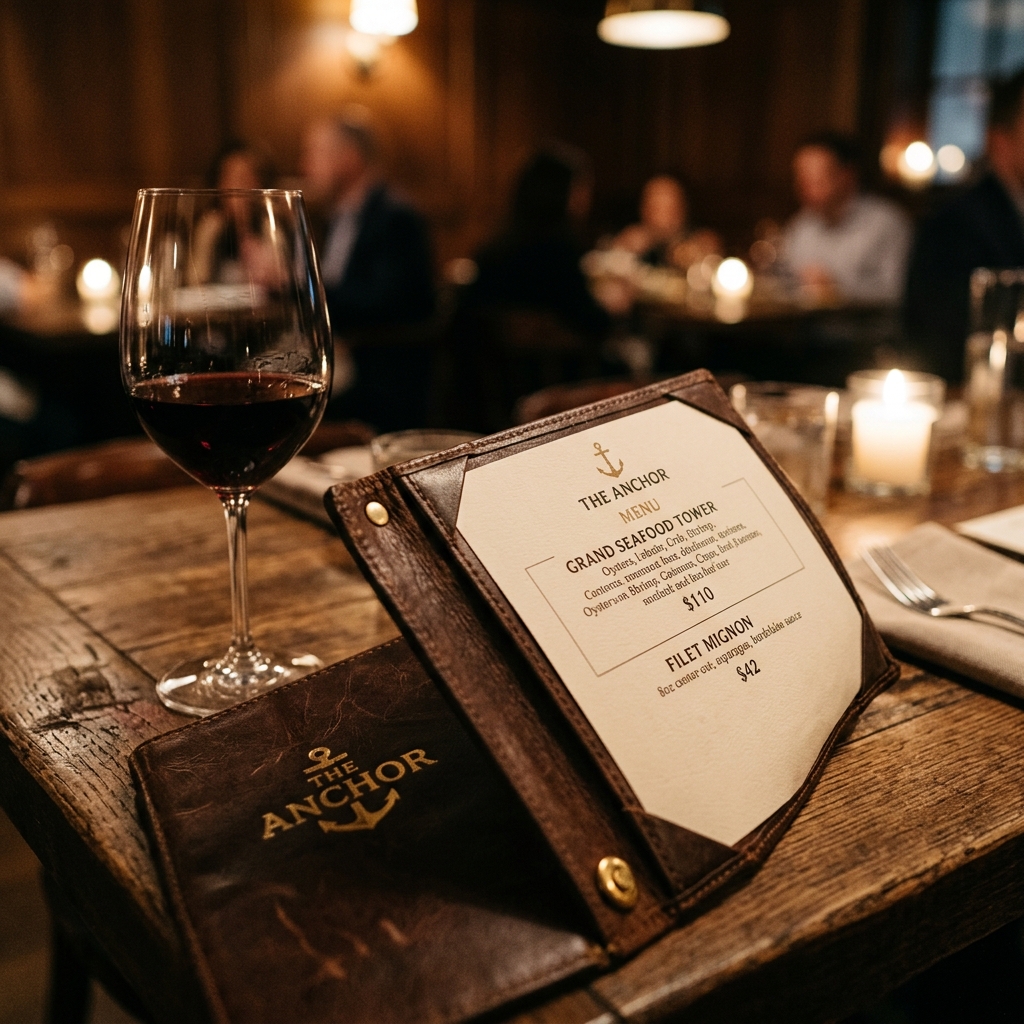
Menu engineers place a conspicuously expensive item, say a $110 seafood platter, near the top of the menu knowing few will order it. Its job is to be seen first. After $110, the $42 steak reads as reasonable, and the $42 steak is where the margin lives. Wine lists do the same with a showpiece bottle. The most expensive item on a menu is usually not a product; it is a psychological instrument aimed at the second most expensive item.
7. Real estate: the listing price trap
The Northcraft and Neale study proved listing prices anchor even professional appraisers, and the industry has never stopped exploiting it. Agents anchor buyers with the asking price, anchor sellers with comparable listings chosen to flatter, and stage negotiations where every counteroffer is judged relative to the first number rather than the property’s value. In Pakistan’s property market the effect is amplified because listed “demand” prices are routinely inflated in anticipation of bargaining, so the entire negotiation happens in the gravity of a number everyone knows is fictional.
8. Salary negotiations: the first number wins
Anchoring research is unambiguous here: the first figure named in a negotiation pulls the final outcome toward it, which is why “what are your salary expectations?” is not small talk, it is anchor placement. Employers who ask first are inviting you to anchor low. Candidates who open with a researched, ambitious-but-defensible number consistently land higher outcomes than those who let the employer’s budget range set the frame. As an I/O psychologist I will add the caveat the LinkedIn gurus skip: anchoring high works when your anchor is justifiable; a number you cannot defend just damages credibility.
9. SaaS pricing pages: the enterprise column
That “Enterprise: Contact us” or $499/month column on the right side of every software pricing page is rarely there to sell. It anchors. After your eye passes it, the $49 middle tier feels modest. I covered the related three-column mechanics in my decoy effect article, and the honest summary is that most pricing pages run anchoring and decoy structures simultaneously: the expensive tier anchors, the crippled cheap tier decoys, the middle tier collects.
10. Luxury brands: the flagship halo
Why does a luxury house sell a $12,000 handbag almost nobody buys? Partly image, but partly arithmetic: after the $12,000 bag, the $650 belt and $400 wallet feel like entry-level bargains, and those accessible items are where volume happens. The flagship product anchors the brand’s price universe so the profitable mid-range feels attainable. Rolex, Hermès, and every premium car lineup with a halo model run the same architecture.
11. Charity donation forms: the preset buttons
Donation pages that display $250 / $100 / $50 / Other are anchoring your generosity. Field experiments consistently show higher suggested amounts raise average donations, because the top button quietly defines what a “normal” gift looks like before you form your own view. Nonprofits A/B test these presets as aggressively as any retailer tests prices.
12. The supermarket “limit” sign
Brian Wansink’s famous 1998 field study: cans of soup on promotion with a sign reading “Limit 12 per person” versus no limit. With the limit sign, shoppers bought an average of 7 cans; without it, about 3.3. The number 12 was not a restriction, it was an anchor for how many cans a person apparently buys. “Limit 4 per customer” signs in any store are quantity anchors wearing a scarcity costume.
13. Pakistani retail and the 11.11 economy
Bringing it home. Daraz sale banners with “Rs. 4,999” crossed out above “Rs. 2,499” are anchoring in its purest local form, and the pre-sale price inflation that sometimes precedes big sale events is the regional version of the fake list price. Bazaar bargaining runs on the same physics: the vendor’s opening demand is set high precisely because the final price will be judged against it, and both parties know the dance. The difference between Karachi’s bargaining culture and Amazon’s strikethrough is honestly just formatting.
⚖️ An honest caveat: anchoring is not the whole story
Because these effects get blended in every marketing blog, a quick precision note. Anchoring sets a reference point that judgments drift toward. The decoy effect uses an inferior option to make a target option dominate a comparison. Framing changes how the same fact feels (“90% fat free” versus “10% fat”). Real pricing pages layer all three, and if you want the decoy layer unpacked, that full article is here.
Also worth saying: anchoring has limits. It weakens when buyers know the market cold (nobody anchors a wholesale trader on their own commodity), and fake reference prices have drawn lawsuits and regulatory attention in several countries. The effect is robust; the sleaziest versions of it are increasingly risky to run.
🛡️ How to defend yourself against anchoring
The bad news first: awareness alone barely helps. The real estate agents in the 1987 study knew prices influence people and anchored anyway. What works is changing your process, not your willpower.
Set your number before you see theirs. Decide what a laptop, house, or salary is worth to you using independent research, and write it down before you look at a single listing or tag. A written pre-commitment is the only anchor strong enough to fight an external one. When you see a crossed-out price, evaluate the sale price as if the original never existed, because functionally it may never have. In negotiations, if the other side anchors first with an extreme number, do not counter incrementally from their figure; name your own researched number and explicitly reset the frame. And for online shopping, price history tools do the remembering your brain will not.
💼 Using anchoring ethically (for the business owners)
I advise businesses on pricing psychology, so here is the line I draw with clients. Anchoring with real numbers is legitimate: showing your premium tier first, listing the flagship before the mid-range, opening a negotiation with an ambitious but genuine position. Anchoring with fictional numbers, inflated “was” prices, comparison figures no one paid, pre-sale markups, is deception with a psychology degree, and JCPenney’s story cuts both ways here. Customers punished honesty partly because the whole industry had trained them on fake anchors. Every fake anchor you print contributes to that training, and it is also, increasingly, the kind of thing class actions are made of. Anchor with the truth. The effect still works; the $110 lobster can be a real lobster.
❓ Frequently asked questions
What is anchoring bias in simple terms?
The first number you see becomes a mental reference point, and your judgments about value bend toward it, even when the number is irrelevant or invented. A $45 shirt feels expensive on its own and cheap next to a crossed-out $100.
What is the most famous anchoring experiment?
Tversky and Kahneman’s 1974 wheel of fortune study: a random number from a rigged wheel shifted people’s estimates of an unrelated question by twenty percentage points. Ariely’s social security number auctions and the Northcraft-Neale real estate study are the other classics.
Is price anchoring illegal?
Anchoring itself is legal and universal. Fake reference pricing, advertising a “was” price the item never actually sold at, has triggered lawsuits and regulatory action against several major retailers. The mechanism is legal; lying inside it may not be.
Does anchoring work on experts?
Yes, and this is the most unsettling finding. Professional real estate agents were swayed by manipulated listing prices and largely denied it. Expertise reduces anchoring somewhat but does not remove it, which is why process defenses beat confidence.
How is anchoring different from the decoy effect?
Anchoring shifts your sense of what a normal price is using a reference number. The decoy effect steers a choice between options using a deliberately inferior third option. Most real pricing structures use both at once.
🧠 Want your pricing analyzed by a psychologist?
I’m Muhammad Shahzeb, an MSc Industrial and Organizational Psychologist and Full-Stack Developer. I audit pricing structures, menus, and negotiation strategies using the research covered in this article. If your prices have never been reviewed through a behavioral lens, the structure is usually leaving money on the table.
📚 References and further reading
- Tversky, A., & Kahneman, D. (1974). “Judgment under uncertainty: Heuristics and biases.” Science, 185(4157), 1124-1131.
- Ariely, D., Loewenstein, G., & Prelec, D. (2003). “Coherent arbitrariness: Stable demand curves without stable preferences.” Quarterly Journal of Economics, 118(1), 73-106.
- Ariely, D. (2008). Predictably Irrational: The Hidden Forces That Shape Our Decisions. HarperCollins.
- Northcraft, G. B., & Neale, M. A. (1987). “Experts, amateurs, and real estate: An anchoring-and-adjustment perspective on property pricing decisions.” Organizational Behavior and Human Decision Processes, 39(1), 84-97.
- Wansink, B., Kent, R. J., & Hoch, S. J. (1998). “An anchoring and adjustment model of purchase quantity decisions.” Journal of Marketing Research, 35(1), 71-81.
- Kahneman, D. (2011). Thinking, Fast and Slow. Farrar, Straus and Giroux. (Chapter 11 covers anchoring.)
- Galinsky, A. D., & Mussweiler, T. (2001). “First offers as anchors: The role of perspective-taking and negotiator focus.” Journal of Personality and Social Psychology, 81(4), 657-669.
- Poundstone, W. (2010). Priceless: The Myth of Fair Value. Hill and Wang. (JCPenney, menu engineering, and reference pricing.)
Written by Muhammad Shahzeb, MSc Industrial & Organizational Psychology | Consumer Psychology Specialist | Full-Stack Web Developer
Learn more about my approach →