

In 1769, the French philosopher Denis Diderot received a gift: a magnificent scarlet dressing gown. It was the finest thing he owned, and it ruined him. Not the gown itself. What the gown did to everything else. Next to its elegance, his old desk suddenly looked battered. So he replaced the desk. The new desk made his chair look pathetic. New chair. The chair exposed the shabby prints on the wall, the worn rug, the tired bookshelves. One by one, Diderot replaced a room he had loved for decades, sliding into debt to keep pace with a piece of clothing, until he sat down and wrote one of the most quietly devastating essays in consumer history: Regrets on Parting with My Old Dressing Gown.
His most famous line from it deserves to be printed on every credit card: “I was the absolute master of my old robe. I have become the slave of my new one.”
Two and a half centuries later, that spiral has a name, the Diderot effect, and I would argue it moves more money in 2026 than almost any bias in consumer psychology. It is why your new phone somehow required AirPods. Why the new sofa made the curtains unbearable. Why one gym membership quietly cost you a full athletic wardrobe and a smartwatch. I am an Industrial and Organizational Psychologist, and in this article I want to take the Diderot effect apart properly: where it comes from, the exact mechanisms driving it, the brands that have industrialized it, and the handful of defenses that actually work.
“Nobody buys ten things. They buy one thing, and then they buy nine apologies to it.”
— Consumer Psychology Analysis, ShahzebSpeaks

📜 What the Diderot effect actually is
The term was coined not by Diderot but by anthropologist Grant McCracken in his 1988 book Culture and Consumption. McCracken noticed something ordinary and profound: our possessions are not a random pile. They form coherent groups, what he called Diderot unities, clusters of objects that feel like they belong together because they express the same identity. The battered desk, the worn rug, and the old robe belonged to one unity: the comfortable, unpretentious scholar. Everything matched, so nothing demanded anything.
The Diderot effect is what happens when a new possession breaks the unity from above. An item arrives that is finer than its surroundings, and instead of the item adjusting to your life, your life starts adjusting to the item. The gap between the new thing and everything else registers as discomfort, and the discomfort demands spending. Crucially, each purchase does not close the gap; it relocates it. The new desk matches the gown but exposes the chair. The spiral has no natural endpoint because coherence is a horizon, not a destination.
Two mechanisms do the heavy lifting. The first is the contrast effect: judgments are relative, so a genuinely fine object does not just look good, it makes its neighbors look actively worse than they looked yesterday, even though nothing about them changed. The second is deeper. Psychologist Russell Belk’s classic work on the “extended self” showed that possessions are not just tools; they are pieces of identity. A new upmarket item is not furniture, it is a claim about who you are becoming, and every old object that contradicts the claim becomes evidence against you in your own home. The spending that follows is not really shopping. It is identity repair.
🍎 Example 1: Apple — the Diderot effect as a business model

If Diderot’s gown were a company, it would be Apple. I do not think the ecosystem strategy was designed with McCracken’s book open on the table, but it could not follow his blueprint more precisely.
The iPhone arrives as the scarlet robe: beautiful, coherent, obviously finer than its surroundings. Then the unity pressure begins. Wired earphones look wrong against it, and the port is gone anyway; AirPods restore coherence. The Android tablet now feels like a stranger in the house; iPad. The charging cables multiply; MagSafe. The notifications deserve a wrist; Apple Watch. Each product is styled in the same visual language, which means each purchase makes the remaining non-Apple objects look more like the battered chair in Diderot’s study. The famous “it just works” integration is real engineering, but it is also unity engineering: the products punish incoherence (features that only work Apple-to-Apple) and reward completion.
Look at the result in cold numbers: the average committed Apple household ends up owning several devices plus services, having entered through a single phone purchase. One robe, then the room. It is the most profitable Diderot spiral ever constructed, and I say that with professional admiration and a slightly raised eyebrow.
🛋️ Example 2: The sofa that renovated the house
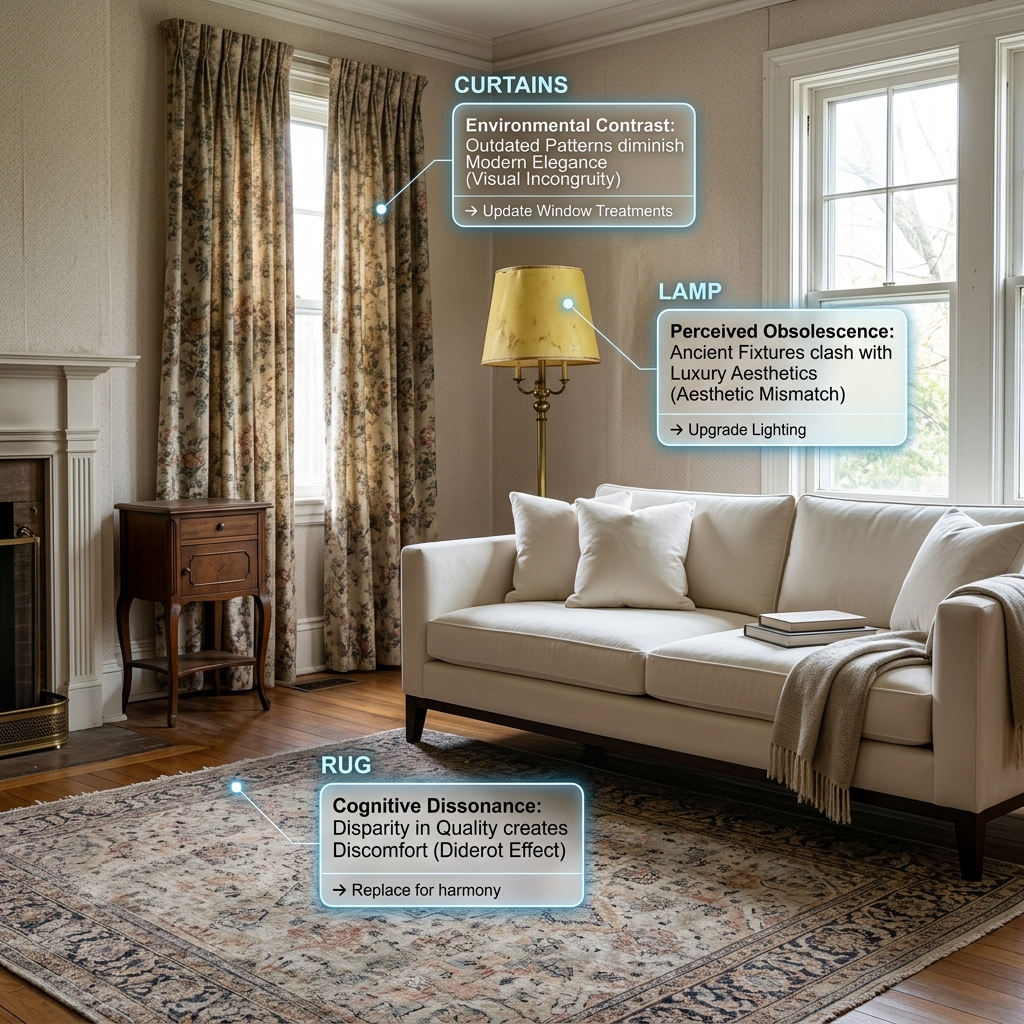
Ask any furniture retailer about the “one item” customer and they will smile. The classic domestic Diderot sequence runs: new sofa, then the curtains clash, then the rug is tired, then the lamps are wrong, then the wall color, then, in the fully developed case, the room next door starts looking like the past. Interior retailers do not fight this spiral; they stage it. IKEA does not sell you a bookshelf; its showrooms sell completed rooms, entire Diderot unities displayed as a single purchasable identity, so the gap between your home and coherence is visible before you have bought anything at all. “Shop the look” e-commerce is the same trick flattened onto a webpage.
The Pakistani version of this is so common it should be in textbooks: the new drawing room sofa set that arrives before a wedding and triggers curtains, carpet, paint, and eventually a renovation loan. Nobody planned the renovation. They planned a sofa. The sofa had other ideas.
🏋️ Example 3: The gym membership that cost a wardrobe
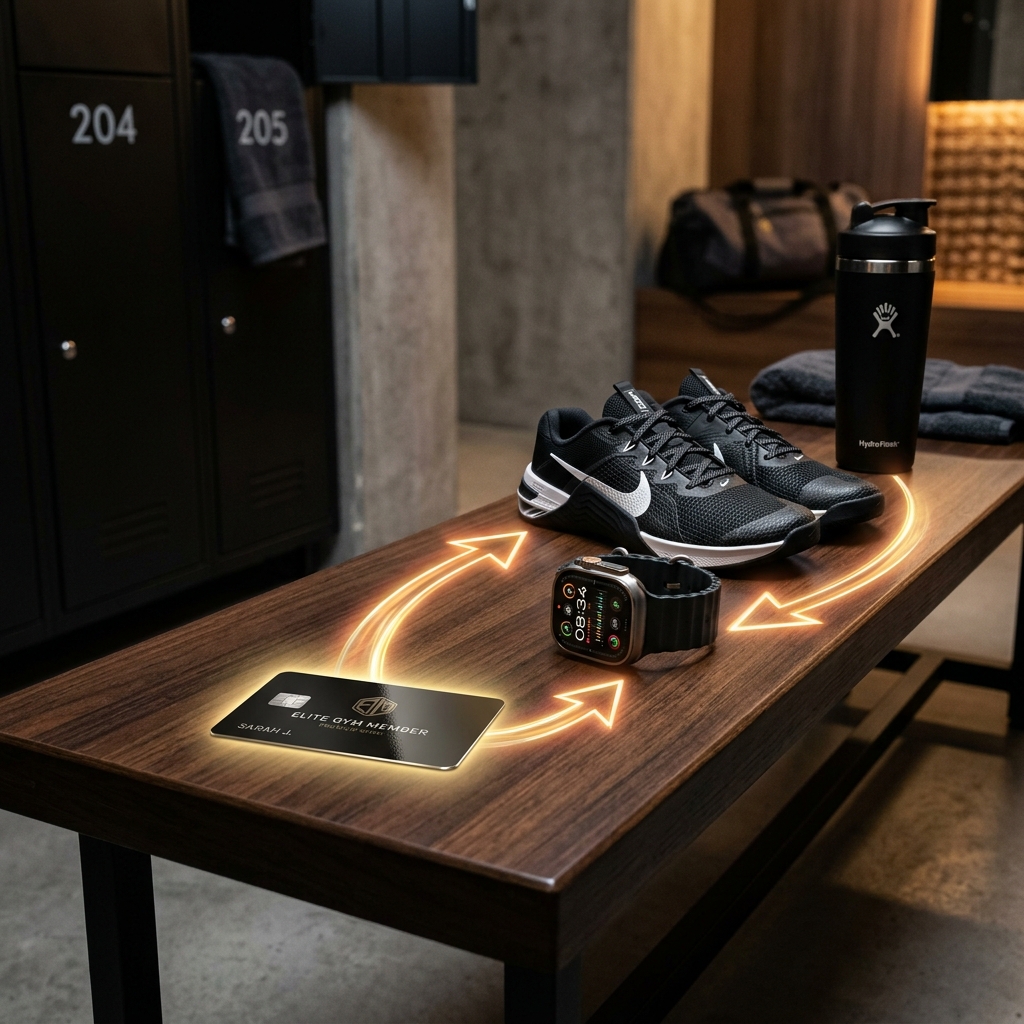
January’s most predictable spiral. The membership is the entry purchase, but the membership is an identity claim, “I am someone who trains”, and the claim demands supporting evidence. Proper training shoes. Gym-coded clothing, because the old t-shirt contradicts the new self. A shaker bottle, a smartwatch to measure the new life, protein, a gym bag, wireless earbuds that stay in during burpees. Fitness retail understands perfectly that it is not selling equipment; it is selling props for a character the customer has just cast themselves as. The membership might cost a few thousand rupees a month. The character costs multiples of that, up front, and the research on gym attrition suggests many characters are retired by March while the props remain.
👜 Example 4: One designer item versus the entire wardrobe
Fashion is the purest laboratory for the effect because clothing is worn as an ensemble, and an ensemble is a unity by definition. One genuinely premium handbag, watch, or pair of shoes reclassifies everything worn alongside it. The phenomenon works in both directions, which is the interesting part: stylists know that one luxury piece “elevates” a cheap outfit, but the owner’s brain runs the ledger the other way, registering every cheap item as a liability against the new asset. This is why a single splurge so often precedes a wardrobe turnover, and why fashion houses happily sell “entry” items like belts and card holders at accessible prices. The entry item is not revenue; it is a seed crystal dropped into your closet.
If you read my Shein analysis, you will recognize a strange inversion here: ultra-fast fashion short-circuits Diderot by making everything equally disposable, no item fine enough to shame the others. The spiral needs a quality gradient to climb. Shein flattened the gradient; luxury steepens it deliberately.
🖥️ Example 5: The gaming PC, the car, and the baby
Three rapid-fire cases to show the range. The gaming setup: one upgraded graphics card exposes the monitor’s refresh rate, which exposes the membrane keyboard, which exposes the office chair, which exposes the desk, and eighteen months later a man who bought a component owns a cockpit with RGB lighting synchronized across seven devices. The new car: floor mats, seat covers, premium fuel that the manual never asked for, a better phone mount, and suddenly the driveway looks wrong. And the new baby, the most sympathetic Diderot spiral of all: one crib demands a nursery theme, matching everything, a camera, a special chair, and parents discover that an object the size of a loaf of bread has redecorated forty square meters. Retailers of baby goods build entire “nursery collections” on exactly this: the unity is sold as love.
🏪 How brands deliberately weaponize the spiral
Once you see the mechanism, you can spot the engineering everywhere, and it is worth naming the five standard tools so you recognize them in the wild.
Ecosystem lock-in designs products that work best, or only, with their siblings, converting unity pressure into technical requirement. Apple is the master, but smart home brands, camera systems, and even kitchen appliance lines run the same play. Complete-the-look merchandising stages coherent sets, showrooms, outfit pages, “get the whole routine” bundles, so the customer experiences their single intended purchase as visibly incomplete. Cross-sell algorithms (“customers also bought”, “frequently bought together”) automate the Diderot suggestion at checkout, at the exact moment the new identity is freshest. Collection releases in fashion and beauty ensure that owning one piece of a drop implies seven missing pieces; my Rhode audit covers how a minimal product line still runs this through matching cases and accessories. And upgrade laddering, base, plus, pro, max, turns the contrast effect inward on the brand’s own catalog, so the spiral can continue without ever leaving the store. Combine this article with the decoy effect and anchoring pieces and you have most of the modern pricing page explained.
⚖️ An honest caveat: not every follow-on purchase is a spiral
I want to be careful here, because the Diderot effect gets stretched in pop-psychology articles until it covers all shopping, which makes it useless. A printer genuinely needs ink. A camera genuinely needs a memory card. That is functional complementarity, and it is just how products work. The Diderot effect proper is about symbolic coherence: purchases driven not by function but by the discomfort of mismatch, the feeling that surrounding objects are suddenly unworthy. The test is simple and slightly uncomfortable to apply to yourself: did the new purchase stop something from working, or did it stop something from feeling right? Only the second one is Diderot, and in my experience auditing my own receipts, the second one is more common than I would like to admit. That admission, by the way, is the point: I study this for a living and the gown still catches me. Awareness is not immunity; it just shortens the spiral.
🛡️ How to defend yourself: five brakes that actually work
Since willpower performs poorly against identity-level urges, the effective defenses are structural, and James Clear’s popular treatment of the Diderot effect in Atomic Habits lands on several of the same ones the research supports.
Buy for the unity you have, not the one you aspire to. When replacing an item, match your existing ecosystem rather than upgrading above it. The upgrade above it is the seed crystal. If you deliberately want a new unity, budget for the whole unity honestly, up front, because you will buy it anyway, on worse terms, one guilty item at a time.
Impose a spiral delay. After any significant purchase, enforce a 30-day freeze on “related” buying. The unity discomfort is sharpest immediately after the trigger purchase and decays with hedonic adaptation; most of the companion items simply stop feeling necessary once the new object has become ordinary, which takes weeks, not months.
One in, one out. The classic minimalist rule works because it converts every acquisition into a trade instead of an addition, which forces exactly the deliberation the spiral is designed to bypass.
Unfollow the showrooms. Curated feeds, “shop the look” pages, and aesthetic influencers are professional unity-gap generators; their entire function is showing you completed sets you now lack. Cutting the exposure cuts the contrast, and contrast is the fuel.
Reread Diderot’s ending. Sincerely. The essay’s close is the best consumer advice ever written by a man in a dressing gown: he did not warn against nice things; he warned against letting a possession set the standard the rest of your life must rise to. Master and slave is the entire psychology in two words. Keep the robe if you love the robe. Just notice, the day it arrives, which one of you is giving the orders.
❓ Frequently asked questions
What is the Diderot effect in simple terms?
One new possession that is nicer than what you own makes your other belongings feel suddenly inadequate, triggering a chain of purchases to make everything “match.” Named after philosopher Denis Diderot, whose gifted dressing gown led him to replace nearly everything in his study.
Who coined the term Diderot effect?
Anthropologist Grant McCracken in his 1988 book Culture and Consumption, building on Diderot’s 1769 essay “Regrets on Parting with My Old Dressing Gown.”
Is the Diderot effect the same as impulse buying?
No. Impulse buying is unplanned purchasing in the moment. The Diderot effect is a structured chain that can unfold over months, where each purchase is individually rationalized as “completing” the previous one. It often feels responsible while it is happening, which is what makes it expensive.
How do companies use the Diderot effect?
Through ecosystems (Apple), complete-the-look merchandising (IKEA showrooms, fashion collections), cross-sell algorithms (“frequently bought together”), and upgrade ladders. Each tactic makes a single purchase feel visibly incomplete.
How do I stop the Diderot effect?
Structural brakes beat willpower: match new purchases to your existing possessions instead of above them, freeze related purchases for 30 days after any significant buy, apply one-in-one-out, and reduce exposure to curated “complete look” content that manufactures the mismatch feeling.
🧠 Want your customer journey analyzed by a psychologist?
I’m Muhammad Shahzeb, an MSc Industrial and Organizational Psychologist and Full-Stack Developer. I audit pricing structures, product ecosystems, and buying journeys using the research covered in this article, including designing ethical cross-sells that customers thank you for instead of resenting.
📚 References and further reading
- Diderot, D. (1769). “Regrets sur ma vieille robe de chambre” [Regrets on Parting with My Old Dressing Gown]. Widely available in translation.
- McCracken, G. (1988). Culture and Consumption: New Approaches to the Symbolic Character of Consumer Goods and Activities. Indiana University Press. (Coins “Diderot effect” and “Diderot unities.”)
- Belk, R. W. (1988). “Possessions and the extended self.” Journal of Consumer Research, 15(2), 139-168.
- Clear, J. (2018). Atomic Habits. Avery. (Popular treatment of the Diderot effect and habit stacking.)
- Dittmar, H. (1992). The Social Psychology of Material Possessions: To Have Is to Be. Harvester Wheatsheaf.
- Kahneman, D. (2011). Thinking, Fast and Slow. Farrar, Straus and Giroux. (Reference points and contrast in judgment.)
- Frederick, S., & Loewenstein, G. (1999). “Hedonic adaptation.” In Well-Being: The Foundations of Hedonic Psychology. Russell Sage Foundation.
- Cialdini, R. B. (2006). Influence: The Psychology of Persuasion. Harper Business. (Commitment and consistency.)
Written by Muhammad Shahzeb, MSc Industrial & Organizational Psychology | Consumer Psychology Specialist | Full-Stack Web Developer
Learn more about my approach →